Supported by


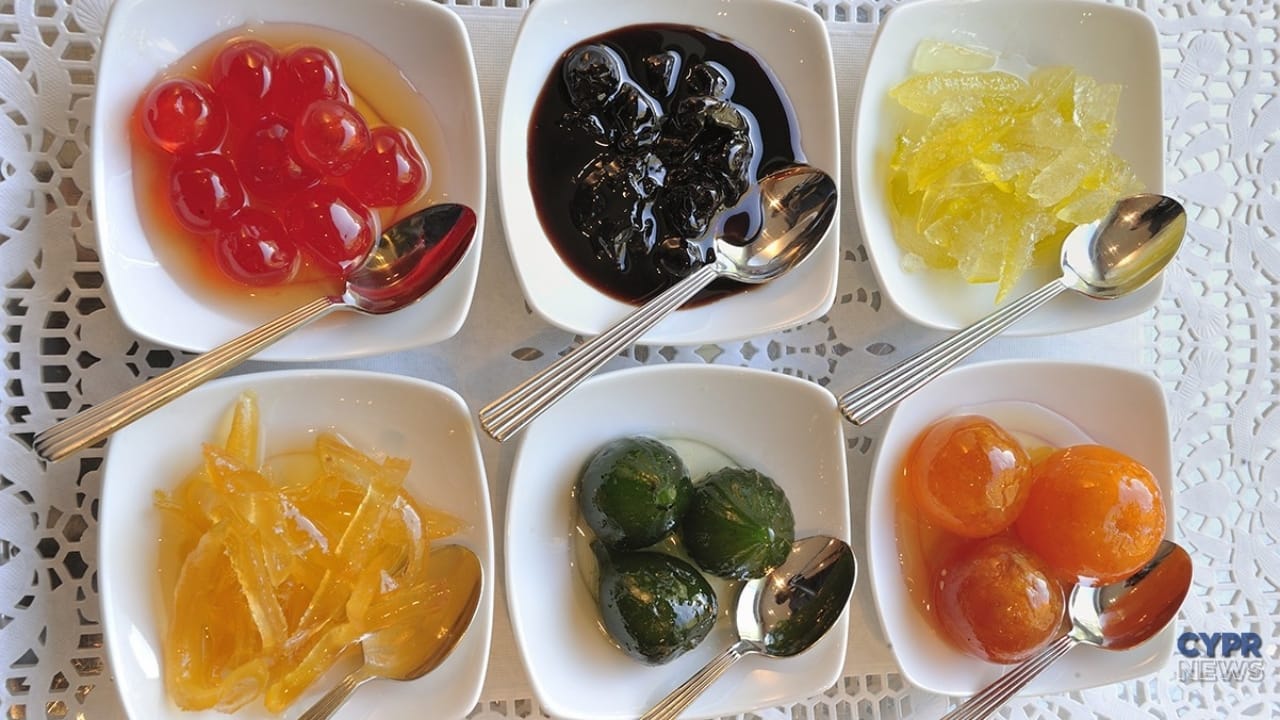
Glyka tou koutaliou It's one of the most iconic symbols of Cypriot hospitality. The name literally means "spoon sweets." A small portion of fruit, vegetable, or nut in syrup is served on a small spoon, usually with a glass of cold water.
Although glyka tou koutaliou may resemble jam, they are prepared differently. Fruit or larger pieces of other produce should retain their shape, firmness, and glossy surface. A Cypriot jar can contain not only cherries, figs, or grapes but also green walnuts, watermelon rind, eggplant, and even olives.
In the past, spoonfuls of sweets were primarily a treat for visitors. The hostess would serve the guest a small portion of glyko and cold water.
One traditional way of serving the sweet was to place a dish of the sweet on the table, with spoons arranged around it. Each guest would take their own portion. The hostess could then hear the request. "geia sta cheria sou", meaning roughly "health to your hands." It was a compliment to the person who prepared the treat.
The little spoon therefore conveyed a very simple message:
you are a welcome guest, sit down, relax and help yourself.
The list of possible ingredients is exceptionally long. The most famous glyka tou koutaliou is prepared with:
Cypriot culinary publications also include recipes using tomatoes, carrots, pumpkin, prickly pears, small eggplants, olives, rose petals and bitter orange blossoms.
The first encounter with such a dessert can turn into a culinary mystery. A shiny piece immersed in thick syrup doesn't always resemble the product from which it was made.
One of the most surprising varieties is glyko, made from small eggplants stuffed with almonds. When prepared properly, the eggplant loses its savory flavor and becomes a sweet dessert.
Young, green walnuts are used similarly. They are harvested before their shells become hard. This allows the entire fruit to be prepared and preserved in syrup.
Olive glyko may be even more surprising. This recipe can be found in the official publication of the Cypriot Department of Agriculture dedicated to traditional preserves.
This doesn't mean that the salty olive is simply doused with sugar. The ingredient is prepared in advance to remove its characteristic bitterness. Only then is it added to the aromatic syrup.
The main difference is the consistency. In jam, the fruit is either crushed or overcooked. In glyka tou koutaliou, it should retain its shape.
The cherry should remain a cherry, the fig should remain a fig, and the small eggplant should still resemble an eggplant.
Each ingredient requires a slightly different approach. Some fruits are pierced or peeled, others are repeatedly soaked and rinsed. Traditional recipes also used water with edible lime, which helped maintain the product's firmness.
Only then are the fruits or vegetables cooked in a sugar syrup. A well-prepared syrup should be soft inside, but not fall apart like marmalade.
The history of sweets on a spoon is connected with ancient methods of storing seasonal products.
Official publications of the Republic of Cyprus indicate that the custom may have become widespread with the development of sugarcane cultivation and sugar production during the period of Frankish rule on the island.
Before sugar became widely available, honey, molasses, carob syrup, and concentrated grape must, among other things, were used for preservation and sweetening.
Glyka tou koutaliou were therefore not just a dessert. They also allowed fruit and other produce to be preserved for months after the harvest.
Family recipes were traditionally passed down from mother to daughter. Many homes had special dishes and small silver spoons and forks for serving food to guests.
The type of sweet prepared depended on what grew in the area. In citrus regions, orange, lemon, and bergamot peels were used. In wine-growing towns, grapes were popular. In mountain villages, figs, nuts, and rose hips, among other things, were processed.
Jars stored in the home pantry thus created a small map of local agriculture.
Sweets on a spoon also appeared at family celebrations. An ancient Cypriot wedding custom involved guests eating glyko directly from a spoon. After use, the spoon was washed and passed on to the next person.
Today, this way of serving food to guests might raise eyebrows. However, it clearly demonstrates that the most important thing was the gesture itself: welcoming the guest and offering them something prepared at home.
It's worth knowing
Glyka tou koutaliou doesn't have to be made with fruit or vegetables. In Cyprus, they are also made with rose petals and bitter orange blossoms.
One of the most characteristic local products is Glyko Triantafyllo Agrou, or rose sweetness from Agros.
Made from Damask rose petals, sugar, and water, it has a thick consistency and an intense rose aroma. In 2016, the product name was entered into the EU register as Protected Geographical Indication.
The protection applies to a product related to Agros, a town famous for the cultivation of roses and products made from their petals.
These days, spoon-fed sweets are more often bought in jars than prepared at home over the course of several days. They can be found in traditional food stores, at local festivals and markets, and directly from producers in Cypriot villages.
Before purchasing, it's worth checking the ingredients and type of product. Alongside the popular figs, cherries, and grapes, you can also find much less obvious options: green walnuts, bergamot, watermelon rind, or small eggplants.
Glyko can be enjoyed on its own, with water or coffee. It can also be added to yogurt, ice cream, and other desserts.
Glyka tou koutaliou show how a practical method of preserving food has become part of the local culture.
Initially, it was about using seasonal harvests and preserving them for the coming months. Later, family recipes emerged, special dishes, and the custom of offering treats to visitors. Thus, a simple jar of fruit in syrup became a symbol of hospitality.
So when someone in Cyprus puts a small plate in front of us with a shiny piece dipped in syrup, it's worth trying.
Even if there is a very real possibility that we have just been served an olive, an eggplant or a watermelon rind for dessert.
Sources: Department of Agriculture of the Republic of Cyprus, Deputy Ministry of Tourism – Visit Cyprus, Cyprus Food Museum, European Commission.