Supported by


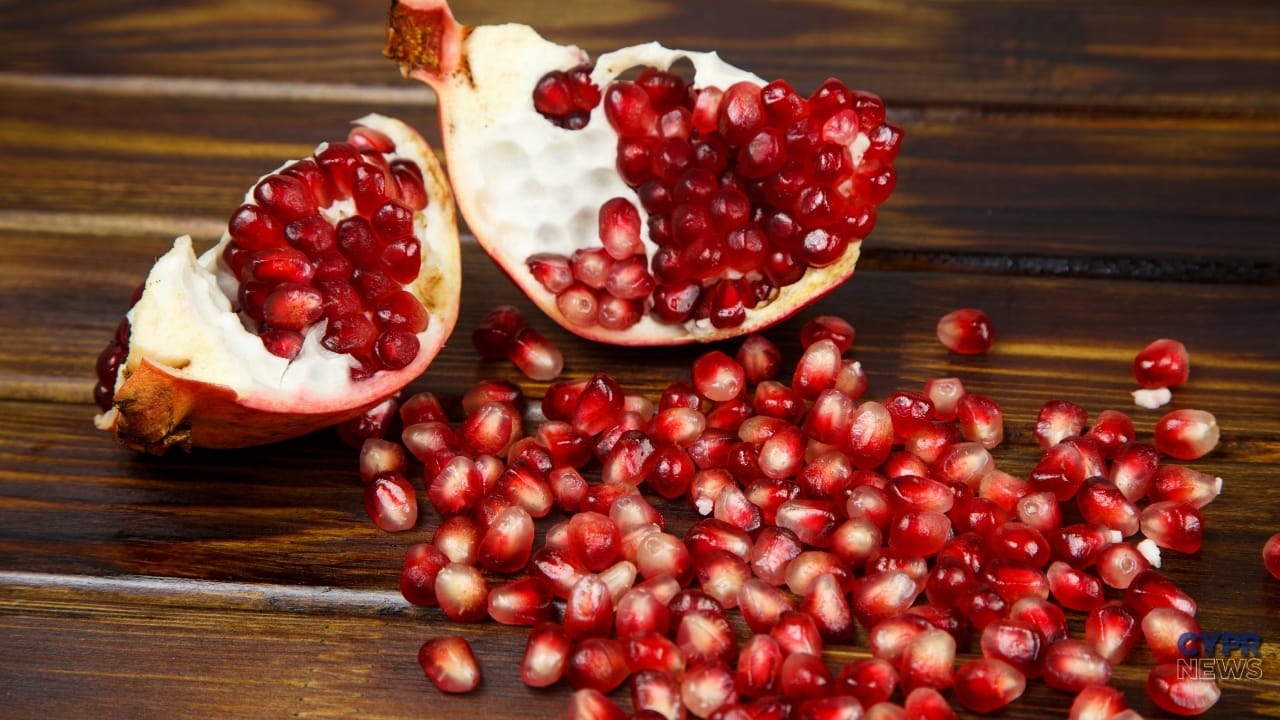
Pomegranate in Cyprus It is more than just an autumn fruit filled with red seeds. For generations, it has accompanied the island's inhabitants during births, weddings, agricultural work, and ceremonies related to the death. Its abundance of seeds has made it a symbol of fertility, abundance, and prosperity.
Pomegranates ripen from August to November. In September, they are increasingly common in shops, markets, and on trees in Cypriot gardens. Their significance, however, extends beyond the culinary sphere. On the island, the pomegranate connects ancient myths, Christian rituals, and ancient family customs.
The pomegranate has been cultivated on the island for a very long time. Cypriot pomegranates were mentioned by early travelers, and in the 19th century, the fruit was traded with neighboring countries.
Pomegranates from the Famagusta region were particularly prized. Part of the harvest was transported by sea, including to Egypt.
The pomegranate's significance, however, stemmed not only from its flavor and storage capabilities. The most important symbolism lay in the numerous seeds hidden within a single fruit.
One of the most characteristic ancient customs was the smashing of a pomegranate after the wedding ceremony.
The fruit was thrown at the entrance to the newlyweds' home. Upon impact, it burst, scattering dozens of red seeds. These symbolized fertility, numerous offspring, prosperity and well-being of the new family.
The meaning of this gesture was clear. A single fruit contained hundreds of seeds, and was therefore associated with abundance and family growth.
Official Cypriot materials devoted to Aphrodite's cultural itinerary also mention the pomegranate as a traditional symbol of fertility associated with ancient wedding rites.
The Cyprus Food Museum cites the ancient author Athenaeus. According to the tradition he describes, the pomegranate was the only tree planted in Cyprus by Aphrodite herself.
This isn't botanical information, of course, but rather an ancient myth. However, it demonstrates how strongly the pomegranate was associated with fertility, femininity, and life.
In the ancient world, the fruit was also associated with Hera and Athena. Its numerous seeds naturally made it a symbol of fertility, abundance, and renewed life.
Ancient Cypriot customs associated with the pomegranate began at the birth of a child.
In the Paphos region, a mixture of pomegranate juice, honey, and sugar was rubbed onto a newborn's lips. It was believed that this would give the child a "sweet" personality and make them healthy and happy.
In other places, before breastfeeding, a few drops of pomegranate juice were symbolically given to the baby.
These are descriptions of ancient beliefs, not modern recommendations for infant feeding. However, they demonstrate how strongly the pomegranate was associated with the beginning of life and the wish for prosperity.
The fruit's symbolism extended beyond family life. In some localities, pomegranates were placed in baskets of grain used during sowing.
The seeds contained within the fruit were meant to symbolically transfer their abundance to the fields. The pomegranate thus became a wish for a good harvest and the security of future harvests.
Similar meanings were attributed to it in many Mediterranean cultures. In Cyprus, however, this symbolism became clearly linked to local agriculture, wedding ceremonies, and family life.
The pomegranate also accompanied the island's inhabitants during rites related to death.
Its seeds are added to Kollyva – a dish of boiled wheat prepared during Orthodox services for the dead. The red color of the seeds was interpreted as symbolizing the blood of the deceased.
The symbolism of the pomegranate also leads back to the ancient myth of Persephone. In it, the fruit connected the world of the living with the underworld, and simultaneously death with the rebirth of nature.
One grenade could therefore mean simultaneously: birth, fertility, abundance, death and rebirth.
Traces of the importance of this fruit are also found in Cypriot archaeology.
Depictions of pomegranates can be seen in ancient mosaics in Nea Paphos, including the House of Dionysus and the House of Aion. The fruit was part of the decorations created by the island's inhabitants centuries ago.
This is particularly interesting because pomegranates still grow in gardens and orchards throughout the Paphos region. The same fruit that appeared in ancient art can be seen growing on branches along Cypriot roads and homes today.
After eating the fruit, the peel was not always thrown away. It was dried in the sun and then used to prepare natural dyes.
They could be used to dye yarn and traditional clothing. Skins soaked in vinegar were also used by shoemakers to obtain a dark dye used in the production of leather footwear.
The pomegranate is another example of a product that was once used almost in its entirety. The seeds, juice, pulp, and even the tough peel were valuable.
Pomegranate also had a very practical use in the kitchen.
During months when lemons were scarce, residents of some villages used the juice of sour pomegranates as a substitute for lemon juice. This practice has been documented, for example, in Agios Amvrosios in the Kyrenia region.
Sweet varieties were consumed directly or used to prepare beverages. The seeds could be added to dishes, desserts, and ceremonial kollyva.
Today, we most often eat pomegranates on their own or add them to salads and desserts. In the past, their uses were much broader.
Cypriot pomegranates ripen from August to November. As summer ends, the fruit increases in size and weight, and their skin changes color from yellowish and pink to intense red.
September and October are therefore a good time to look for pomegranates in gardens, orchards, at markets and on the shelves of local shops.
Ripe fruit can remain on the tree for a long time. However, care must be taken because pomegranates harvested too late may begin to split, exposing the seeds inside.
It's worth knowing
A pomegranate's ripeness shouldn't be judged solely by its red color. Individual varieties vary in skin color, with some ripe fruits remaining lighter.
Few fruits have accumulated so much meaning around them.
Garnet appeared at birth, during weddings, at sowing, and on the table. It also accompanied services for the dead, found a place in ancient mosaics, and, according to legend, was associated with Aphrodite herself.
Therefore, in Cyprus, the pomegranate is more than just a seasonal fruit. It is a symbol of fertility, abundance, and renewed life—from its beginning to its end.
Sources: Cyprus Food Museum, Deputy Ministry of Tourism – Visit Cyprus.