Supported by


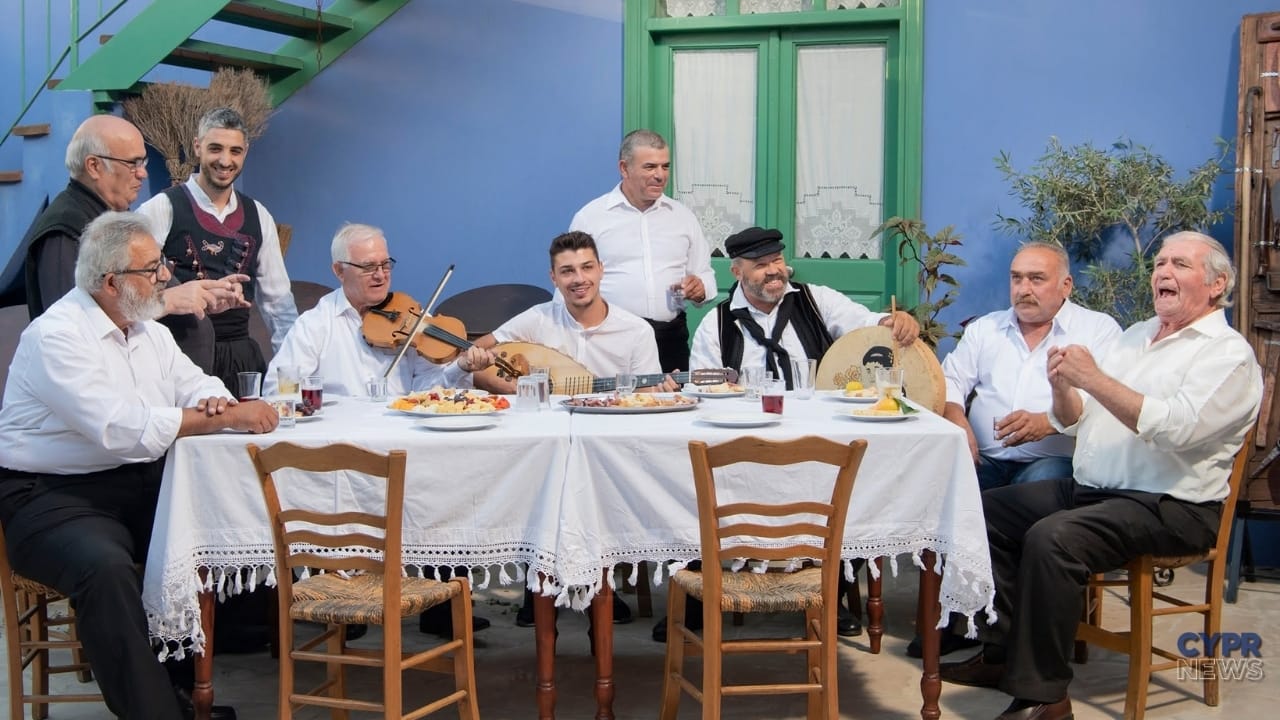
Tsiattista in Cyprus This is one of the island's most unique verbal traditions. Two poets face each other and, without prepared text, respond in rhyming verses. What counts are reflexes, wit, knowledge of the Cypriot dialect, and the ability to quickly craft a well-aimed response.
This isn't folklore performed solely for tourists. For generations, Tsiattista have accompanied weddings, fairs, and public celebrations. In 2011, they were inscribed on UNESCO's Representative List of the Intangible Cultural Heritage of Humanity.
They can be most simply described as: live poetry duel.
One participant creates a rhyming statement, and their opponent must respond almost immediately in a similar fashion. However, this isn't about randomly combining words.
Good tsiattistis, a performer of this tradition, should be familiar with the Cypriot Greek dialect, local folk poetry, and the principles of its rhythm. They also require a rich vocabulary, imagination, and the ability to withstand the pressures of time.
The answer must fit the opponent's statement. It should be rhythmically correct, logical, and accurate. The audience is most impressed by lines that are witty, surprising, or that effectively turn a previous joke against its author.
The most popular variety is tsiattista tou paliomatou, i.e. a form with a clearly competitive and aggressive character.
Participants create subsequent lines as a direct response to what their opponent has just said. The traditional fifteen-syllable system is most commonly used, although forms with a different number of syllables are also encountered.
Improvisation remains paramount. A performer cannot memorize the entire statement beforehand because they don't know how their opponent will attack them.
He must create an answer here and now.
Tsiattista was performed at weddings, festivals, fairs, and other large gatherings. The audience was not just a passive observer.
She responded with laughter, applause, and cheers. She encouraged the participants to continue competing and immediately assessed the quality of each response.
One poet would deliver a humorous or sarcastic verse. The other would try to respond with something even better. If the audience particularly liked the riposte, the pressure on the opponent immediately increased.
Tsiattista combines elements of poetry, humor, spectacle, and public duel. Everything happens live, and the audience's reaction is part of the entire spectacle.
Poetic duels are often accompanied by music. Traditional accompaniment is provided primarily by the violin and Cypriot lute.
Instruments help maintain rhythm, but they also build tension. The poet can't respond with just any sentence. He must fit the thought into a specific structure, maintain rhythm, and find the right rhyme.
At the same time, his statement should make sense and relate directly to the opponent's words.
It is this combination of improvisation, poetry, and music that makes tsiattista much more challenging than they may appear from an audience perspective.
The most spectacular remain the duels, but the Cypriot tradition also includes other varieties of improvised poetry.
Tsiattista can address love, shepherds' lives, everyday problems, social relationships, and even politics. This same form, therefore, served more than just playful rivalry.
It allowed people to comment on events, talk about feelings and express opinions about the local community.
Thanks to this, the tsiattista are a source of knowledge not only about the language, but also about the life and way of thinking of subsequent generations of the island's inhabitants.
Tsiattista are strongly associated with Cypriot Greek dialectIt is the local variety of the language that provides the distinctive vocabulary, sound, and rhythm needed for improvisation.
A person who only knows standard Greek might have trouble understanding parts of the duel. The difficulty is compounded by wordplay, old expressions, local sayings, and the rapid pace at which the answers are delivered.
As a result, the tradition retains a very local character. It is directly linked to the manner of speaking and the sense of humor of Greek-speaking Cypriots.
For many years, most famous performers were older men, often without formal literary training.
They acquired skills by listening to more experienced poets, memorizing characteristic structures, and participating in local events. Knowledge was passed down primarily orally.
Over time, women also began to participate in duels. This is an example of a tradition that is gradually opening up to new performers without losing its basic form.
Tsiattista are particularly closely associated with Larnaca and the celebration of Kataklysmos, one of the most important Cypriot holidays taking place at the beginning of summer.
Documentation of the tradition shows numerous duels held during the Larnaca Kataklysmos. This large celebration provided a wide audience for poets and allowed residents to witness the best improvisers in direct combat.
Competitions during Kataklysmos also played an important role in maintaining tradition and presenting it to future generations.
Tsiattista were inscribed on the UNESCO Representative List of the Intangible Cultural Heritage of Humanity in 2011.
This was the second Cypriot entry on the list. Two years earlier, in 2009, the tradition of Lefkaritika lacemaking was recognized.
UNESCO has noted that tsiattista provide local communities with a sense of continuity and identity. Their preservation may also foster interest in similar forms of improvised oral art found in other parts of the world.
Local communities, state institutions and organizers of festivals and educational programs are involved in activities aimed at preserving tradition.
Tsiattista can be cautiously compared to modern freestyle.
Two people face each other. There's an audience, improvisation, rhythm, rhymes, and an attempt to respond to their opponent with something even more apt.
The music, language, and cultural significance of the two forms are obviously different. However, the principle of a direct verbal duel sounds surprisingly familiar.
You don't need to know literary history or understand every word of the Cypriot dialect to feel the excitement of the moment when you have just a few seconds to come up with the perfect retort.
Cypriots were fighting rhymes long before such fights were called freestyle.
Sources: UNESCO Intangible Cultural Heritage, Cyprus National Commission for UNESCO