Supported by


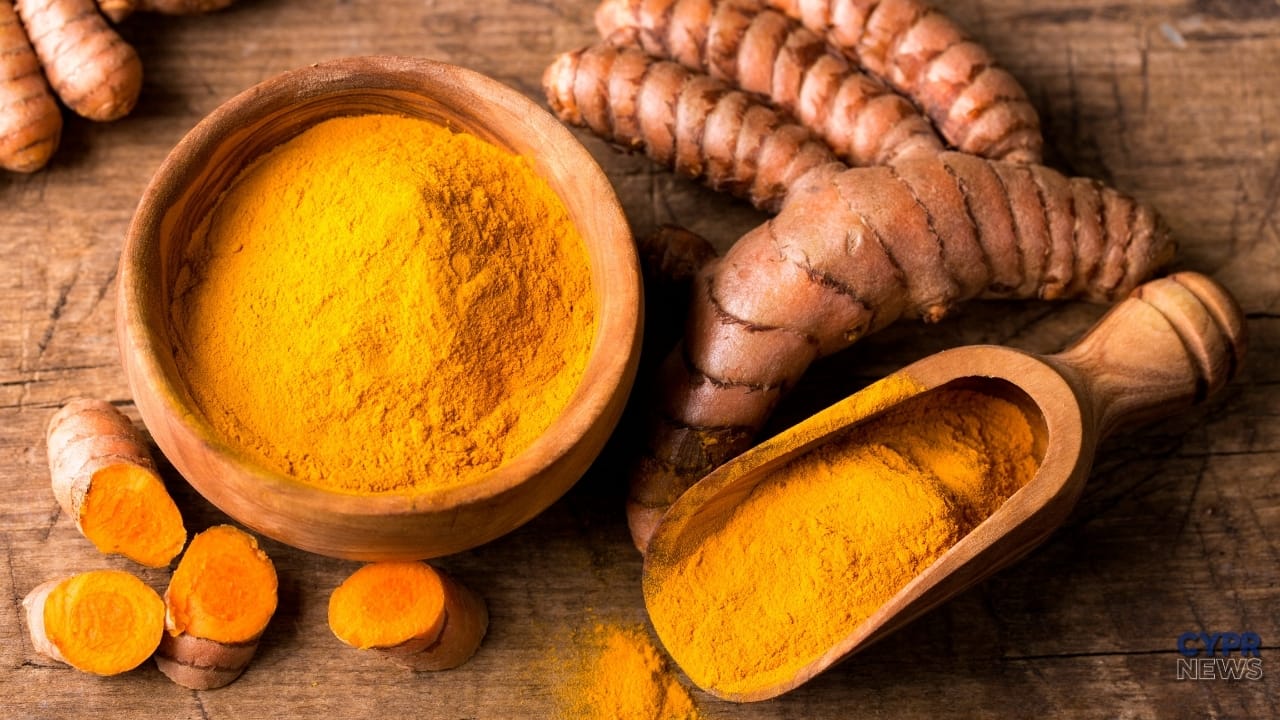
In Cyprus, turmeric is no longer just an imported spice in yellow powder. Fresh rhizomes can be found on store shelves, and at least one local producer offers turmeric grown on the island. At first glance, it's easy to confuse it with ginger—only when cut open does the intensely orange core become visible.
This doesn't mean that all fresh turmeric sold in Cypriot stores is local. Imported products, including those from Thailand, are also available in chain stores. Local cultivation remains a curiosity for now, but it demonstrates that a plant primarily associated with Asia can also be found in Cypriot conditions.
Most people know turmeric as a bright yellow powder used in curries, rice, and sauces. Fresh turmeric has a completely different appearance.
Its brown, slightly wrinkled skin and irregular shape make it resemble a small piece of ginger. And that's no coincidence – Curcuma longa belongs to the same ginger family, ZingiberaceaeThe part used in cooking is not actually the root, but the rhizome, or underground stem.
This is what fresh turmeric looks like, which we recorded in one of the Cypriot shops:
Once cut, the resemblance to ginger ends. The turmeric's interior has a strong yellow-orange color, which is due in part to curcuminoids, including the most famous curcumin.
The most interesting thing, however, is that fresh turmeric does not have to travel thousands of kilometers to reach the local market.
Dragon Fruit Farm Shop offered fresh turmeric in the Larnaca area in May 2026, stating in the advertisement that it was local manufacturer of this productThe seller described it as "fresh local turmeric."
This is not yet proof of the emergence of a significant branch of Cypriot agriculture. Nor is there any basis for speaking of mass production. However, it does show that Curcuma longa is already being cultivated commercially, at least by small producers on the island..
It's important to check the product's origin. For example, fresh turmeric currently available at Alphamega is said to come from Thailand.
Simply finding a fresh rhizome on a Cypriot shelf does not mean that it was grown locally.
Turmeric is a thermophilic plant. The Royal Botanic Gardens, Kew, states that it originated in Asia, with India and broader South or Southeast Asia considered the most likely area of origin. Today, India remains the world's largest producer, consumer, and exporter of turmeric.
The plant takes many months to develop. The rhizomes are planted in the ground and harvested usually after about 7–10 monthswhen the lower leaves begin to turn yellow.
It requires warmth and well-drained soil and is frost-resistant. This makes small-scale cultivation in the mild Cypriot climate not as exotic as it might initially seem.
This doesn't mean, however, that turmeric is a traditional Cypriot plant. Unlike grapes, olives, carob, or potatoes, it is a new, niche product.
Fresh turmeric can be used similarly to ginger.
It can be:
It has a fresher, more pronounced and slightly earthy flavor than the powdered spice.
There is only one problem: colors almost everything it touchesIt can leave hands, cutting boards, clothes, and light-colored countertops intensely yellow.
The powder is made from rhizomes, which are processed, dried and then ground.
Turmeric has become one of the most popular "superfoods" in recent years, with curcumin being particularly talked about.
It's worth being careful here.
The American National Center for Complementary and Integrative Health emphasizes that despite numerous studies There is currently insufficient evidence to definitively conclude that turmeric or curcumin effectively treats specific diseases.This applies especially to advertised preparations and supplements.
Turmeric, however, remains a common culinary ingredient used for thousands of years, especially in Asia.
Fresh turmeric may not be as eye-catching as colorful fruits or exotic vegetables. It looks quite inconspicuous on the shelf.
But when you see small brown rhizomes next to the ginger described as turmeric or in Greek κουρκουμάς, it is worth taking a closer look at them.
And check the label for country of origin.
Because today it may be turmeric from Thailand – but it may also be turmeric grown in Cyprus.
Sources: Royal Botanic Gardens Kew, National Center for Complementary and Integrative Health, Dragon Fruit Farm Shop, Alphamega.