Supported by


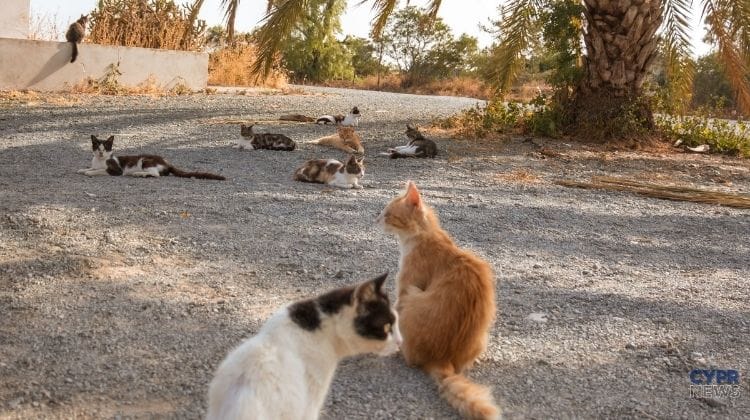
Cats in Cyprus They are such a ubiquitous feature of the landscape today that it's easy to dismiss them as simply a part of contemporary island life. We encounter them in taverns, hotels, ports, monasteries, and on the streets. However, their Cypriot history is much older than one might think.
One of the most famous stories takes us to the Akrotiri peninsula, to the monastery of Agios Nikolaos ton Gaton – Saint Nicholas of the Cats. According to tradition, thousands of cats were brought there to ward off a plague of snakes. However, archaeology shows that humans lived with cats on the island thousands of years before this legend arose.
One of the most important discoveries was made at a Neolithic site Shillourokambos.
Archaeologists found a complete cat skeleton buried near a human. The find was dated to around 9.5 thousand years agoThe study authors considered this burial arrangement to be evidence of a very close relationship between humans and animals.
This discovery was also unique because it pushed the history of human-cat relationships much further back in time than the well-known depictions of cats from ancient Egypt.
Even more recent research indicates that small felines from the group Felis silvestris lybica could have been transported by people to Cyprus around 11 thousand years agoOne reason may have been the need to limit the number of mice that appeared around the first settled farming communities.
It's worth knowing
The Shillourokambos cat doesn't prove that domestic cats, exactly like today's, existed 9,500 years ago. However, it does show that the bond between humans and felines was strong enough at the time that the animal was buried alongside humans.
A much more recent history leads to the monastery of Agios Nikolaos ton Gaton on Cape Gata, about 15 kilometres west of Limassol.
Official Visit Cyprus describes it as possibly one of the oldest monasteries on the island. According to tradition, its origins are linked to Saint Helena, mother of Emperor Constantine the Great.
The story goes that at that time, the island was hit by a severe drought. The area around the cape was said to have been deserted and the area was infested with snakes.
According to the same tradition, Emperor Constantine sent a commander named Kalokeros, which was supposed to bring in and release thousands of cats. Their mission was to reduce the number of snakes.
It is from this story that the popular name comes from. Monastiri ton Gaton – Monastery of the Cats.
Here we must separate history from legend.
Official tourist materials tell the story of the cats being brought here as tradition, not a documented event whose course can be unquestionably confirmed today.
This does not mean, however, that the idea of using cats to fight rodents or other small animals is unbelievable.
Research into the origins of the human-cat relationship points to precisely this mechanism. Developing settlements and food storage attracted mice. Cats took advantage of the easy food source, and humans benefited from the presence of a natural hunter.
The story of Akrotiri may belong to the world of legend, but the cooperation between man and cat as pest hunters has very old foundations.
The present-day monastery church dates back to the 14th century. The complex was abandoned in the 16th century, and monastic life was only restored in 1983, when Orthodox nuns took up residence there.
Cats are still an integral part of the place.
The official Visit Cyprus website even writes that the animals living near the monastery are, according to local tradition, descendants of cats that were supposed to rid the area of snakes centuries ago. This is, of course, part of the story, not a confirmed lineage.
Thanks to this, however, the legend did not remain just a name written in the guidebook.
When you enter the courtyard, the cats are actually there.
Definitely cats.
More than five thousand years separate the Neolithic burial at Shillourokambos and the time of Constantine the Great.
This is what makes the history of Cypriot cats so fascinating. The most famous legend speaks of the animals being introduced in the 4th century, while archaeology shows that felines arrived on the island thousands of years earlier.
Moreover, because Cyprus is an island, the emergence of Middle Eastern felines required human intervention. The animals had to be transported by sea.
This means that someone over ten thousand years ago considered a cat to be an animal useful enough – or important enough – to take it with them on their boat.
The Monastery of Saint Nicholas of the Cats remains one of the most picturesque symbols of the island's unique relationship with these animals.
But the story began much earlier.
Before monasteries existed, before Christianity came, and before anyone told stories about cats fighting snakes, people were transporting these animals across the Mediterranean.
At least one of them was considered so close to humans that he was buried next to them in a grave about 9,500 years ago.
That's why a cat on a Cypriot street may look quite ordinary.
His story on the island is definitely not ordinary.
The material was prepared based on information from the Deputy Ministry of Tourism – Visit Cyprus and scientific research on the early relationship between humans and cats in Cyprus.