Supported by


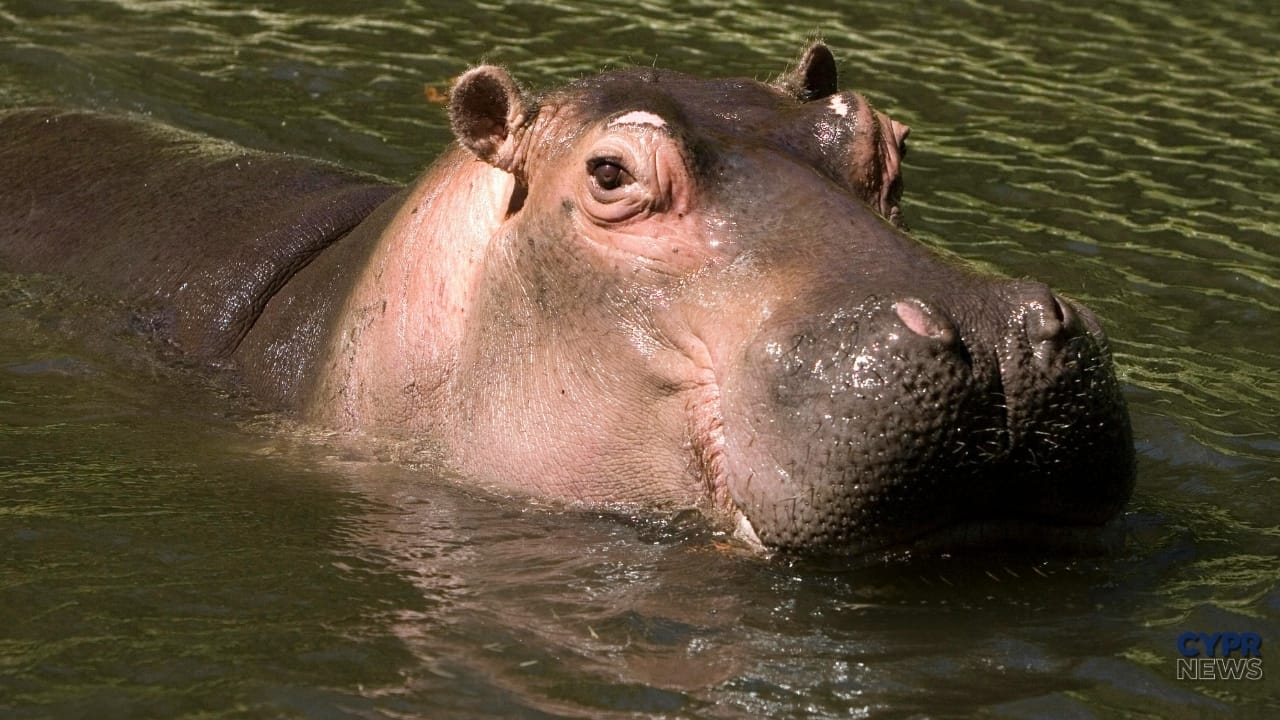
Pygmy hippos in Cyprus are not a legend or a tourist story. As recently as the late Pleistocene, small hippos and elephants roamed the island, but over thousands of years of isolation, they became much smaller than their continental ancestors.
The Cypriot pygmy hippopotamus reached up to approximately 1.5 meters long and 75 centimeters highThe elephants here were equally remarkable – adults were about one meter highTheir fossilized bones have been found in many places on the island.
This is the first question that comes to mind after hearing this story.
Cyprus was never connected to the mainland by land during the Pleistocene. The Geological Survey Department of the Republic of Cyprus estimates that even during the ice ages, when sea levels were much lower than today, the island was at least 30 kilometers from the nearest mainland.
So how did large mammals get here?
Their ancestors must have somehow crossed the sea. This may have occurred during extremely rare crossings, when the animals swam or floated on natural rafts formed from trees and vegetation swept away by the water.
It didn't have to be a large group. All it took to start an island population was a few animals that made it to land, survived, and began reproducing.
Similar cases of island colonization by large mammals are also known from other parts of the Mediterranean.
Once the animals were in Cyprus, evolution began to work.
On the continent, large size can be an advantage. It helps defend against predators, obtain food, and cover long distances.
Conditions are different on the island.
Less space, limited food, and a lack of large predators mean that maintaining a large body size may no longer be cost-effective. Smaller individuals require less energy, find food more easily, and move more efficiently in confined environments.
Over the generations, Cypriot hippos and elephants became smaller and smaller.
This phenomenon is called island dwarfism.
It wasn't confined to Cyprus. Similar examples are known from Crete, Sicily, Sardinia, Rhodes, Tilos, and Corsica, among others.
In Cyprus, however, the effect was spectacular. From large continental ancestors, some of the smallest known representatives of their groups evolved.
The Cypriot pygmy hippopotamus is currently most often described under the name Hippopotamus minorIn some publications we will also encounter the name Phanourios minor.
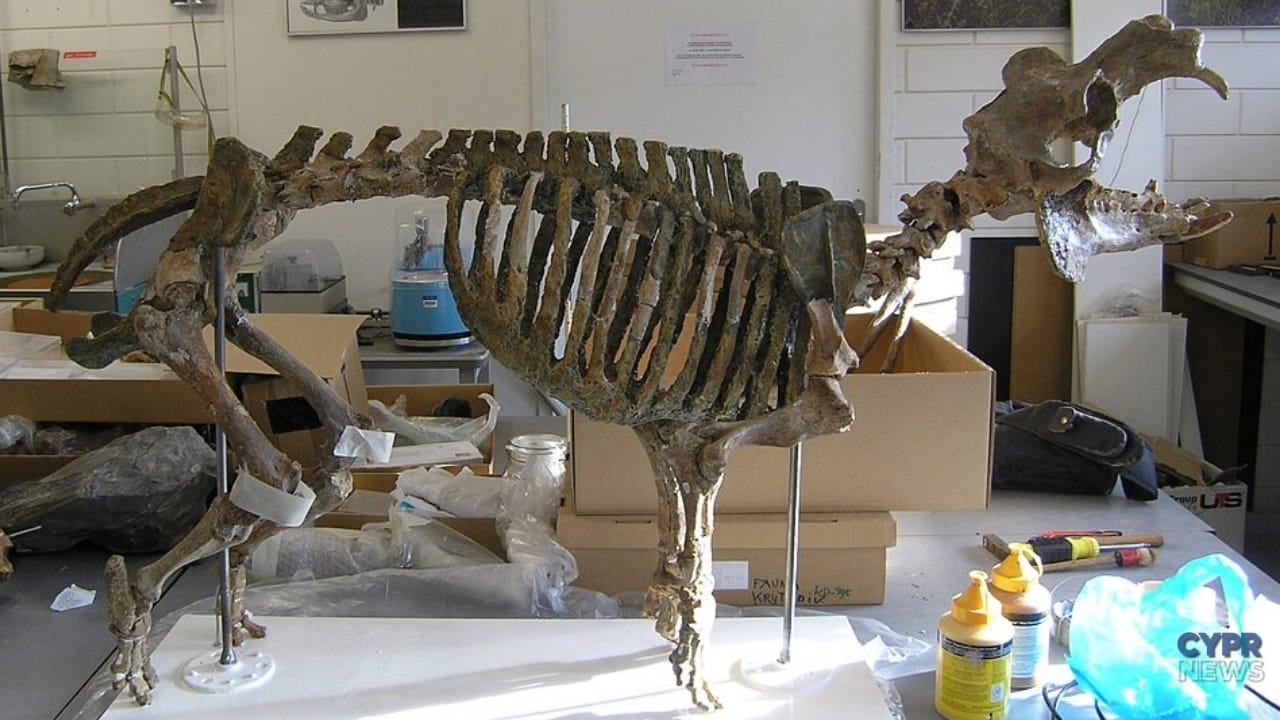
According to the Cyprus Geological Survey, the animal reached approximately 1.5 meters long and 75 centimeters highMore recent studies estimate its mass at around 130 kilograms.
By comparison, a modern Nile hippopotamus can weigh several tons. Its Cypriot relative was therefore many times smaller, though still a massive animal.
It didn't exactly look like a scaled-down copy of a hippopotamus alive today.
Isolation didn't just change the size of his body.
This is one of the most interesting details.
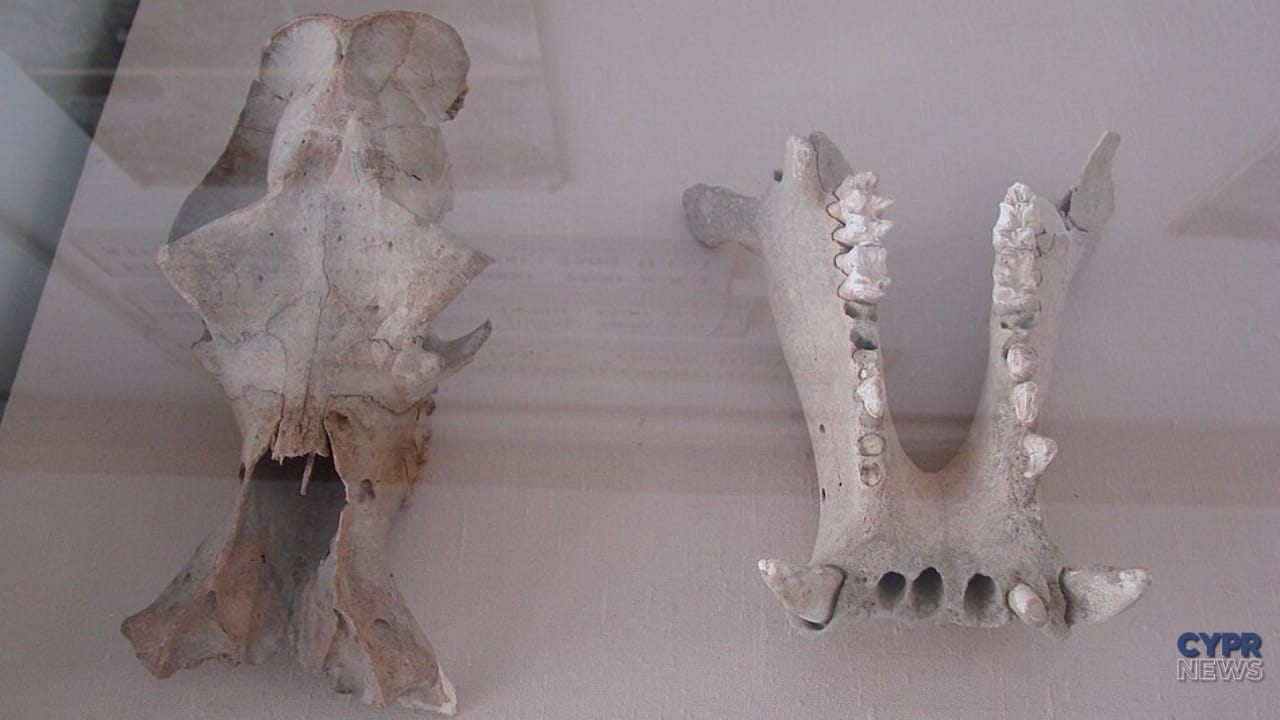
The bone structure of the Cypriot hippopotamus indicates that it was much more adapted to life on land than the modern Nile hippopotamus.
Among other things, the proportions of the limbs, the structure of the feet, the shape of the jaw and the position of the eyes and nostrils have changed.
The eyes and nose were positioned lower than those of a modern hippopotamus. Shortened limbs and changes in the structure of the feet indicate that the animal was capable of moving well over rocky and mountainous terrain.
The Geological Survey Department summarizes these characteristics by stating that the Cypriot pygmy hippopotamus he preferred walking to swimming.
If we could see Cyprus from several thousand years ago, we wouldn't necessarily find hippos spending all day in the water.
We would probably see them wandering on land and feeding on vegetation.
Hippos were not the only large mammals to be dwarfed in Cyprus.
He also lived on the island pygmy elephant, currently referred to as Palaeoloxodon cypriotesIn older publications you can find the name Elephas cypriotes.
According to the Cyprus Geological Survey, an adult individual reached approximately one meter high.
It was therefore one of the smallest known elephants. Its size demonstrates the enormous changes that long-term isolation of a small population on an island can bring.
However, elephant remains are found much less frequently than the bones of pygmy hippos.
Fossils do not come from one random site.
The remains of pygmy hippos and elephants have been discovered in many parts of the island. The Geological Survey Department specifically mentions the caves at the foot of Pentadaktylos and the areas around Xylofagou and Agia Napa.
Bones have often been found in sediments at the bottom of caves and other natural depressions. This may indicate that animals used such places for shelter.
The most famous site, however, remains Akrotiri-Aetokremnos, located on the Akrotiri peninsula near Limassol.
It was there that a huge number of hippopotamus bones were discovered, next to traces of one of the earliest human presences in Cyprus.
Aetokremnos is a small rocky shelter located on the southern coast.
The research yielded extraordinary material – almost 300,000 animal remains, about 98 percent of which belonged to pygmy hippos. They represented at least several hundred individuals.
A few remains of dwarf elephants, bird bones, thousands of shells and over a thousand stone artifacts were also found.
The site is dated to approximately 12 thousand years ago, i.e. approximately at the turn of the Pleistocene and Holocene.
This period is very close to the time when pygmy hippos and elephants disappeared from the island.
And this is where one of the greatest discussions concerning the ancient history of Cyprus begins.
Over the years, the hypothesis has been developed that early humans may have played a significant role in the extinction of local hippos.
Aetokremnos researcher Alan Simmons argued that the presence of tools and a large number of animal remains indicate human exploitation of hippos. He believes hunting pressure may have contributed to their extinction.
More recent modeling published in 2024 also found that even a relatively small human population could quickly drive large, slow-reproducing animals living in a limited area to extinction.
However, the matter is not finally resolved.
Other scientists question the direct link between humans and the bone accumulation. They point to the lack of clear cut marks on many of the remains and the possibility that the bones accumulated naturally over time.
Studies of the age of the animals represented by the discovered jaws also suggested a population structure more consistent with natural mortality than mass hunting.
Therefore, we should not write that people definitely killed off the Cypriot hippos.
It's more honest to say: The first humans appeared in Cyprus around the end of the existence of pygmy hippos, but their role in the animals' extinction remains a matter of scientific debate.
This story has another extraordinary chapter.
For centuries, inhabitants have been finding large bones in caves without having any way of determining what animal they belonged to.
So local explanations arose.
The Geological Survey Department reports that fossils of pygmy hippos and elephants have been interpreted as bones of saints or martyrsSome caves were converted into places of worship or churches were built near them.
The bones have been associated with sites including Agioi Saranta in Xylofagou, Agios Fanourios in the Kyrenia region, and Agioi Fanentes or Fanontes on the Akamas peninsula.
The generic name of the Cypriot hippopotamus used by some scientists also comes from St. Fanurios – Phanourios.
The connection between the fossil and the saint was therefore recorded even in the history of the scientific naming of the animal.
Not everywhere were large bones explained by the presence of saints.
Sometimes their size and unusual shape led residents to a different conclusion: These must have been the remains of dragons.
The Cyprus Geological Survey links such discoveries to place names such as Drakontospilios, Drakontotrypa, Drakontovounaro, Dragon Cave and Drakontia.
Today we know that these were not dragon bones.
Before paleontology was developed, however, the fossil of a large and unknown animal protruding from a cave wall required some explanation.
Local legends filled the gap that contemporary knowledge could not yet explain.
You don't have to limit yourself to photos and scientific descriptions.
Limassol District Archaeological Museum presents the remains of a pygmy hippopotamus and an elephant from the prehistoric site of Akrotiri-Aetokremnos.
The Department of Antiquities lists them among the oldest exhibits in the first part of the museum exhibition.
You can therefore see the bones of animals that walked the island thousands of years before the first Cypriot cities were founded.
Before visiting, it is worth checking the museum's current opening hours, as they may change depending on the day of the week and the time of year.
When we think of ancient Cyprus, we usually think back to the Greeks, Romans, Byzantines or the medieval Lusignans.
This story goes back much further.
Back then, there was no Limassol or Paphos as we know it. There were no temples, castles, ports, or vineyards.
Hippos measuring about 75 centimeters tall and elephants only reaching about one meter tall roamed the island.
Later the animals disappeared.
What remains are bones in caves, local stories about saints and dragons, and a site at Akrotiri that scientists still debate.
And that is why the prehistory of Cyprus can be as fascinating as its ancient cities.
Before kings, merchants, and temple builders appeared on the island, miniature hippos and elephants roamed the land.
Sources: Geological Survey Department of the Republic of Cyprus, Department of Antiquities of the Republic of Cyprus, Journal of Archaeological Science: Reports, Quaternary International, PLOS ONE, Proceedings of the Royal Society B.