Supported by


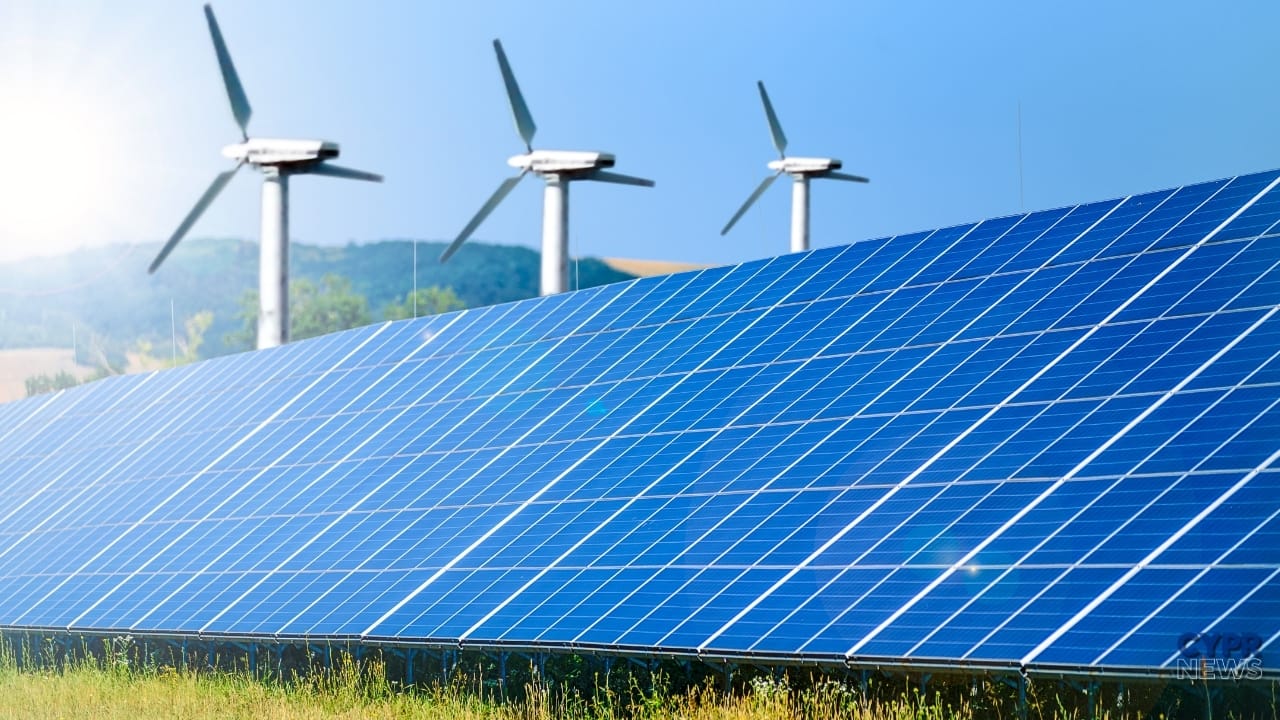
Renewable energy in Cyprus accounted for 36.8 percent of national electricity production in June 2026. In Poland, this share was nearly 39 percent in the same month. Poland also achieved a better result in April and May.
However, both countries remained below the European Union average. In the second quarter of 2026, renewable sources provided 54.1 percent of the EU's electricity production. Despite enjoying some of the best solar conditions in Europe, Cyprus still hasn't fully exploited its potential.
Eurostat data shows that the share of renewable sources in Cypriot energy production increased in the first months of the second quarter.
In April it was 34.66 percent, in May it increased to 36.84 percent, and in June it remained at a similar level – 36.80 percent.
In July, there was a significant drop to 29.98 percent. For Poland, the latest comparable monthly data covers the full second quarter, so we do not include July in the direct comparison of the two countries.
In Poland, the share of renewable energy sources in net electricity production was:
Poland thus outperformed Cyprus in all three months, although the gap gradually narrowed. In April, it was around 4.8 percentage points, in May 3.3 points, and in June just 2.2 points.
The comparison shows that the number of sunny days does not determine the share of green energy in the national system.
Cyprus relies primarily on photovoltaics for its renewable energy development. Poland, on the other hand, utilizes a more diverse set of sources. In addition to rapidly developing solar installations, wind farms, biomass, and hydroelectric power plants play a significant role.
Wind can also produce energy at night and during periods of low sunlight. This allows renewable sources to contribute to production throughout most of the day.
The Polish system is also connected to the networks of other European countries. This facilitates balancing production and demand and partially mitigates problems associated with excess energy at certain times.
Across the European Union, 54.1 percent of electricity production came from renewable sources in the second quarter, up from 54.3 percent a year earlier.
Both Cyprus and Poland therefore remained below average. However, the difference was greater in the case of the island, which hovered around 35–37 percent.
The highest share of green energy was recorded in Latvia, at 97.7 percent. Next in line were:
The lowest results were recorded by:
The leaders' high performance isn't solely due to photovoltaic installations. Latvia and Croatia rely heavily on hydropower, while Denmark relies heavily on wind farms.
Solar energy accounted for 41.6 percent of all renewable energy produced in the EU in the second quarter, up from 37 percent a year earlier.
The following sources were:
This shows that photovoltaics is developing very rapidly. At the same time, countries with the highest renewable energy share typically don't rely solely on a single source.
The share of renewable sources doesn't depend solely on how much energy the panels produce. It's calculated relative to total electricity production.
In summer, electricity demand increases dramatically due to heavy air conditioning use. If additional demand is met by conventional power plants, the percentage of solar energy may decline, even during a very sunny month.
Limited storage capacity and the isolation of the Cypriot system from the energy networks of other countries also remain problems.
When photovoltaic installations produce more energy than can be used, operators must curtail their operation. This means some of the potential production is lost.
The development of photovoltaics on the island has outpaced the modernization of the infrastructure needed to utilize all available energy.
The solution is to build large storage facilities that will allow for the storage of surplus electricity from the afternoon hours and its return to the grid in the evening. The Cyprus Energy Company is preparing investments to reduce the forced shutdown of renewable energy installations.
The planned power connection with Greece could also be significant. It would enable the export of surplus energy and the import of energy during peak demand. However, the project still faces financial and geopolitical challenges.
A comparison with Poland shows that climate alone doesn't guarantee a high share of green electricity. Diversified sources, storage facilities, a modern grid, and the ability to exchange energy with other countries are also needed.
Sources: Eurostat, Cyprus Business News, Cyprus Mail, Cyprus Energy Company.