Supported by


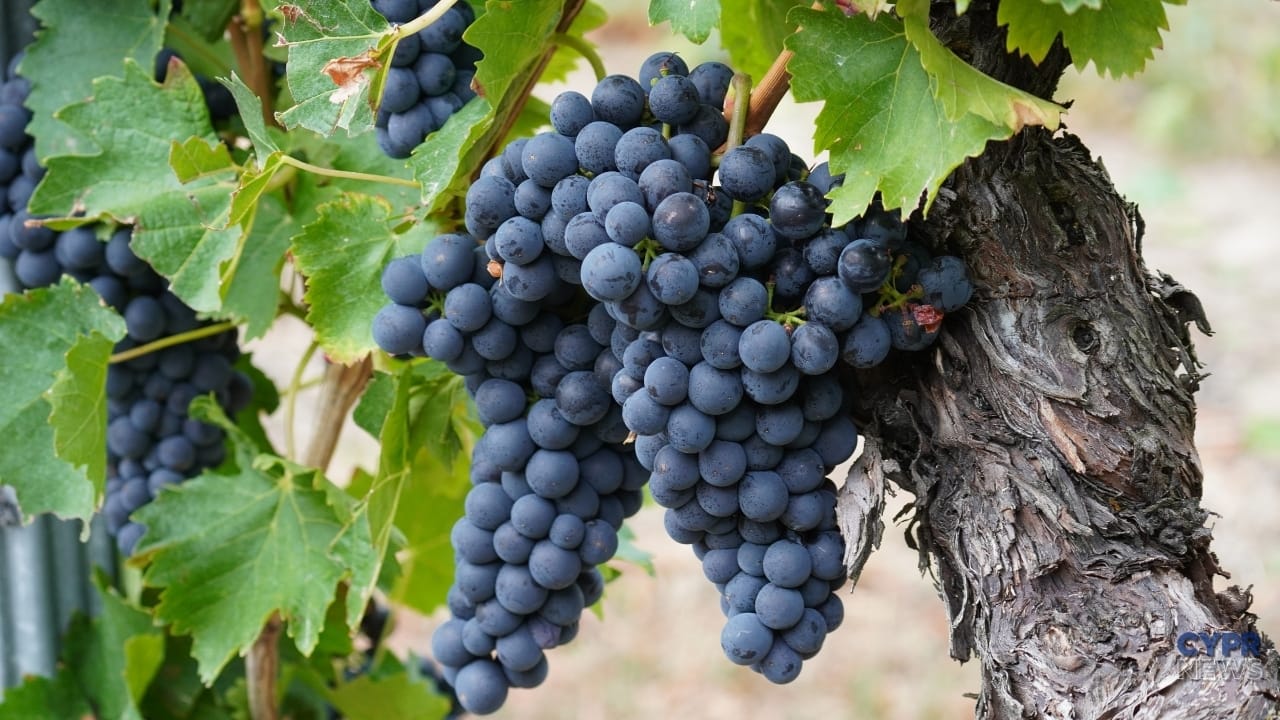
Cypriot vines They have a characteristic that is not visible during a casual walk among the vines. In many local vineyards, the roots, trunk, shoots, and fruit belong to a single plant. The vines have not been grafted onto a different rootstock.
In most European wine regions, this is now a rarity. This is due to phylloxera, a small insect that devastated a vast portion of the continent's vineyards in the 19th century. Cyprus has remained free of this pest, so most of the local vines can still grow on their own roots.
Phylloxera (Daktulosphaira vitifoliae) is native to North America. It was brought to Europe in the 19th century and began attacking primarily the roots of European grapevines. Vitis vinifera.
The pest damages roots, limiting the plant's ability to absorb water and nutrients. The weakened plant becomes susceptible to infection, and in severe cases, it may die.
The scale of the devastation was enormous. In France alone, phylloxera contributed to the loss of approximately one million hectares of vineyards. Winemakers tried various methods to combat the insect, but the final solution changed European winemaking forever.
European grape varieties were not completely replaced. However, they began to be grafted onto rootstocks derived from American varieties that were more resistant to phylloxera.
This is still the case today.
The fruit may be from Cabernet Sauvignon, Chardonnay, Merlot or another variety Vitis viniferaHowever, underground there is a root system derived from a hardy American grapevine.
As a result, most of the vines growing in modern European vineyards consist of two interconnected plants:
In Cyprus, this reconstruction of vineyards was not needed on a massive scale.
The island's location has helped protect local crops. Phylloxera has not established itself in Cyprus, which is why the island remains one of the few wine regions free of this pest.
This is confirmed by both official documents from the Republic of Cyprus and research on local grape varieties. This means that the vast majority of Cypriot grapes can grow on their own roots.
While walking through an old vineyard in the region of Paphos, Pitsilia, Krasochoria or Commandaria, you can see plants cultivated in a way that was common in other parts of Europe before the phylloxera disaster.
If a cutting is taken from the shoot of an existing vine and allowed to develop its own root system, the entire new vine remains the same variety.
There is no separate rootstock or visible grafting point. The roots, trunk, shoots, and fruit belong to a single plant.
Some Cypriot vineyards still propagate local varieties this way. Cuttings are taken from selected old vines, then rooted and planted as new plants.
It's worth knowing
Cypriot vines are not automatically immune to phylloxera. They grow on their own roots, as the pest has not established itself on the island. Its arrival would pose a serious threat to local vineyards.
The absence of phylloxera has helped the very old vineyards survive. Official Cypriot records indicate that some vines growing on their own roots are over a hundred years old.
Such vines often look completely different from young plants planted in neat rows. They have thick, twisted trunks and grow low to the ground. On mountain slopes, they can be irregularly spaced and trained in a traditional shrub formation.
Some of the old vineyards are not irrigated. The vines must cope with low rainfall, high temperatures, and poor, rocky soils.
This doesn't mean that every ancient vine produces excellent wine. However, it is a living testament to the continuity of Cypriot winemaking.
The most common local varieties are white Xynisteri and red MavroBoth play a special role in the history of Commandaria.
Sweet Cypriot wine is made from these two grape varieties. The fruit is harvested when very ripe and then left in the sun. Partially drying increases the concentration of sugar and aromas.
In the case of old, rooted vineyards, the history of the wine and the history of the vine literally grow from the same roots.
The age of the bush and its own roots do not guarantee high quality. The final result is also influenced by:
However, old vines have enormous value as agricultural and genetic heritage, preserving local varieties and traditional vineyard management practices.
Old-growth plants are also often well adapted to the conditions of a specific location. Over the decades, they develop extensive root systems and have to cope with the Cypriot drought.
Xynisteri and Mavro are the most famous, but they do not exhaust the list of local varieties.
Also grown on the island:
Some of these grapes have remained marginalized in commercial winemaking for years. Cypriot producers are now increasingly re-emerging, using them to create wines clearly linked to their local origins.
An interesting example is Spourtiko. This variety helps pollinate Maratheftiko, whose flowers have a unique structure and require the presence of carefully selected shrubs nearby.
The absence of phylloxera didn't guarantee the survival of every old variety. However, it did help preserve an environment where vines could be propagated for generations without having to rebuild entire vineyards on new rootstocks.
The history of European winemaking has a clear boundary: the period before phylloxera and the time after its appearance.
In the second half of the 19th century, many regions had to replant vineyards. The root systems of the vines, their propagation methods, and crop planning methods were modified.
Cyprus was largely spared this revolution. Therefore, the ancient vine growing near Panagia, in Pitsilia, Krasochoria, or one of the villages in the Commandaria region may be much more than a picturesque, twisted shrub.
Its roots and fruit belong to the same variety – just as they did a hundred years ago and just as they did before the catastrophe that changed almost the entire European wine industry.
Sources: Republic of Cyprus – Trade Service, Deputy Ministry of Tourism – Visit Cyprus, Agricultural Research Institute of Cyprus, DEFRA Plant Health, IVES Open Science.