Supported by


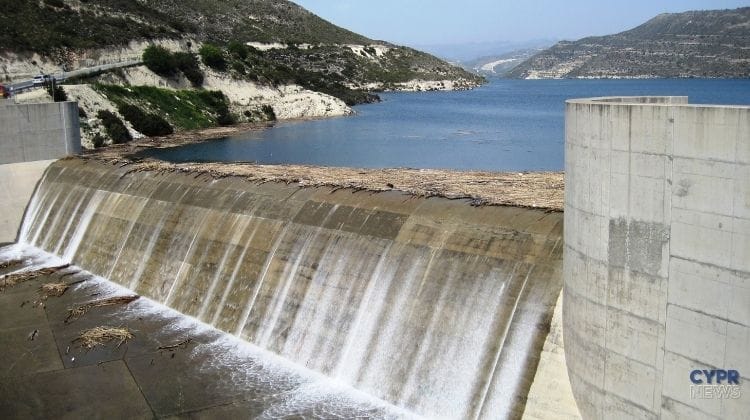
Dams in Cyprus received approximately in the last 24 hours 140,000 m³ of water after unusually heavy rainfall for August. The vast majority – approximately 118,000 m³ – ended up in the Kouris reservoir. However, the Department of Water Resources Development emphasizes that the recent rains do not change the overall picture or plans for water management.
Rainfall, however, is very beneficial for agriculture. On some farms, it has allowed them to reduce irrigation by one or two cycles, reducing current water consumption while water resources remain under tight control.
According to Alexios Fragkeskos from the Department of Water Resources Development, approximately 140,000 m³ of water has flowed into the reservoirs in the last 24 hours.
The largest part of this amount – approximately 118,000 m³ – accepted Kouris, the largest reservoir on the island.
The rainfall was unexpected for August, but not record-breaking. In the summer of 2019, inflows during the same period were about twice as high.
The Department emphasises that recent rainfall does not significantly impact the overall water situation.
Farmers benefit the most. For crops that require irrigation two or three times a week, the rain allowed them to skip one or two waterings.
On an annual basis, this may reduce farm water demand, but it is not to a level that would change the strategic resource management plan.
For comparison, the daily drinking water demand for cities across the country is approximately 300–350 thousand m³.
This means that the total amount of water that entered the dams within 24 hours after the recent rainfall corresponds to approximately one part of the city's daily needs.
At the same time, the Department assures that water supplies are secured until the end of the year.
Seawater desalination plants play a key role in the system.
According to the Department over 75% of the water supply needs of cities are currently covered by desalination plants.
There are no delivery restrictions at this time.
The dams contain approximately 120 million m³ of water, which corresponds approximately to 40% of their total capacity.
The situation is better than a year ago, but the services are still very cautious.
Caution is particularly evident in planning supplies for agriculture.
Farmers' organizations are to ask the new agriculture minister for additional water from the Southern Conveyor Project for new potato plantings.
However, the department does not currently see much room to increase allocations.
The reason is a change in planning. Instead of analyzing the situation only for a one-year period, the services are now preparing scenarios covering three consecutive years.
Under conservative assumptions, available resources do not provide a sufficient margin of safety to easily increase the amount of water allocated to irrigation.
Reclaimed water is also an increasingly important part of water management.
Every year, more than 20 million m³ of purified water for irrigation of crops for which such use is permitted.
A particular example is Limassol, where – according to the Department – irrigation is now almost entirely carried out using reclaimed water.
In the coming years, the available quantities are expected to increase with the expansion of the sewage system and the increase in the amount of sewage entering the treatment plants.
The Department of Water Resources Development urges that the August rainfall should not lead one to believe that the water shortage problem has been solved.
Fluctuating rainfall patterns in recent years and irregular inflows to dams make long-term planning difficult.
Therefore, saving water should – as the services emphasize – become an everyday habit, and not a reaction that appears only when the levels in reservoirs drop dramatically.
Source: Cyprus News Agency (KYPE)