Supported by


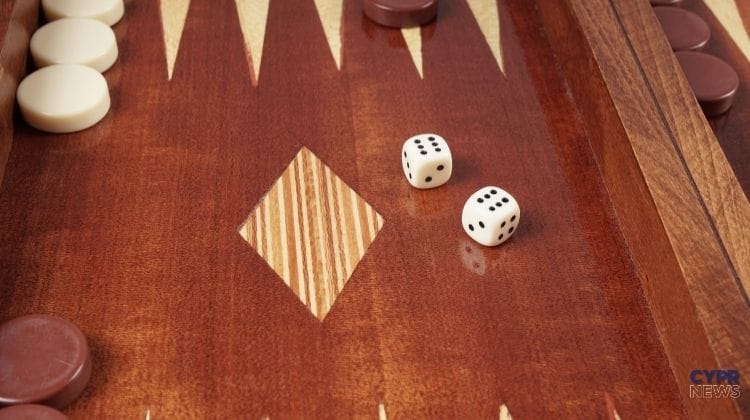
Tavli in Cyprus It's much more than a board, pawns, and two dice. In traditional kafenio, the clatter of dice on the wooden board has been mingling with conversation and the smell of strong coffee for generations, creating one of the most iconic images of daily life on the island.
Sunday seems like a good day to take a closer look at this tradition. While tavli is sometimes simply called backgammon, there's more than one game behind the familiar board, and a lucky roll of the dice isn't enough to consistently win.
The traditional kafenio was never just a place to grab a coffee. It served as a local gathering place – a place for conversation, relaxation, reading the newspaper, playing cards, and, yes, tavli.
The official Visit Cyprus guide describes the village kafenio through the distinctive clatter of dice hitting the board and small cups of strong local coffee. Tavli is presented as a game where prestige is paramount, and skills are passed down through generations.
In the same material, a very Cypriot image appears: the younger ones challenge their grandparents, while the other family members watch the game, comment on the moves and give advice.
This says a lot about the importance of this inconspicuous board.
For someone looking from the side, it seems simple: the board looks like backgammon, there are the same pieces and dice, so it is probably the same game.
Not quite.
Term tavli traditionally includes a set of several game variations played on the same board. The three most common are: Portes, Plakoto and FevgaThey are played according to different rules, although the common goal is to successfully guide your own pieces across the board and remove them before your opponent.
Portes most closely resembles the Western European backgammon. In Plakoto, instead of capturing a single opponent's piece, you can immobilize it by covering it with your own. Fevga changes the rules even further – opponents move in the same direction, and pieces are not captured.
One wooden board can therefore mean three completely different duels.
It's worth knowing
Tavli isn't just one specific backgammon variant. Traditionally, it's a set of games played on the same board, of which Portes most closely resembles classic backgammon.
At first glance, tavli may seem like a game of chance. After all, each move begins with a roll of the dice.
However, this is only part of the game.
The outcome of the roll dictates the possibilities, but the player must still decide which pieces to move, when to take risks, when to hedge, and how to exploit the board situation. Different variations require different strategies.
This is why an experienced player can make much better use of even an unfavorable throw than a beginner.
Official Visit Cyprus highlights this mix of luck and skill, writing about the ability to pull out a win even from the most unfavorable dice.
And perhaps that is why one game can arouse much more emotions than the calm image of two people sitting over coffee would suggest.
The most classic image of a tavli is of two elderly men leaning over a board somewhere in a village kafenio.
This view can still be seen, but the game has not stopped in the past.
Cyprus University of Technology organised a student chess and tavli tournament, which clearly shows that the board game still has a place in the lives of younger generations.
Modern coffee shops have also adopted some of the old-school social culture. The Cyprus Mail described the kafenio as a place where board games, conversations, and tavli still take place over coffee—and not just among the oldest patrons.
The tables have changed, coffee is increasingly iced, and a smartphone lies next to the board, but the very need to sit down together and play another game has remained surprisingly similar.
The most interesting thing about tavli, however, is not the rules.
You can learn the movements of the pieces, memorize the differences between Portes, Plakoto, and Fevga, and even try to calculate the probabilities of subsequent throws. All of this still doesn't explain why the game is so strongly associated with the local way of life.
The answer probably lies around the board.
Tavli gives you a reason to sit across from someone else. The game takes time. During it, you can chat, joke, comment on your opponent's moves, or simply grab a coffee.
And when grandfather and grandson appear at the table, the board starts doing something else.
It conveys a small fragment of everyday life that does not need a museum or a special holiday to survive.
In Cyprus, tradition is not always hidden in ruins, monasteries or museum displays.
Sometimes it lies on a small table in a cafe.
It has a wooden board, 30 pieces and two dice.
And if after the game someone immediately sets up the pieces from the beginning, we have probably just heard one of the most Cypriot sentences that does not even need to be said:
We're playing again.
The material was prepared on the basis of information from the Deputy Ministry of Tourism – Visit Cyprus, Cyprus University of Technology and materials regarding the rules of traditional varieties of tavli.