Supported by


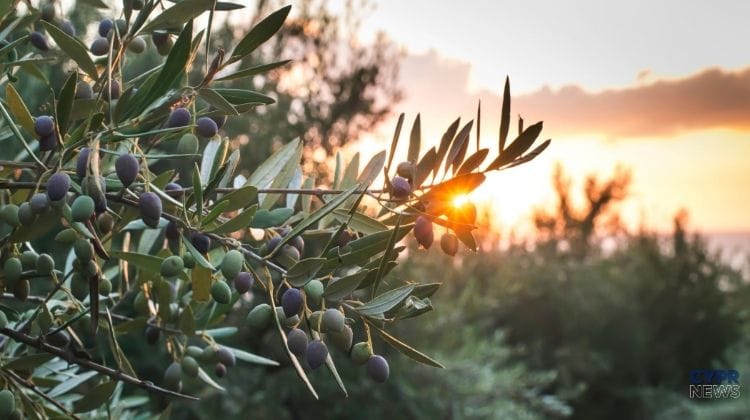
Ancient olive trees in Cyprus Their massive, twisted trunks can look as if they've been to a completely different island. And indeed, some specimens are centuries old and exceed 10 meters in circumference. They are not only natural monuments but also part of the local agricultural and cultural history.
The Cyprus Forest Department lists the trees at Xyliatos and Anglisides among its most remarkable specimens. According to published materials, the department estimates their age at around 800 years, and the circumference of the Xyliatos olive tree is as much as 12.8 meters.
The European olive is one of the most characteristic trees of the Mediterranean landscape, but in Cyprus its connection with humans goes much further than modern groves.
The Republic of Cyprus' government gastronomic guide cites research by scientists from the Agricultural University of Athens, which indicates that the area around Filia in the Morphou district is one of the most ancient areas associated with olive cultivation. Olive cultivation can be traced back to around 4800 BC.
Archaeology also confirms a very long history of olive oil production. Remains of ancient olive presses have been found on the island, and for centuries olive oil was not only a food product but also a traded commodity.
One of the most unusual specimens described by the Forest Department is the ancient olive tree in Xyliatos.
Its circumference is given as 12.8 meters, and the age was estimated at approximately 800 yearsThe second monumental tree is located in Anglisides. Its trunk is approximately 10.35 meters circumference, and the Forest Department also estimated its age at around 800 years.
This means that if these estimates were accurate, trees would have started growing around the Middle Ages.
Over the centuries, states, rulers, borders, methods of farming and entire towns changed.
And the olives continued to grow.
It's worth knowing
Official sources don't always give the same age for the same trees. The Forestry Department estimated the olive tree at Anglisides at around 800 years old, while the current Visit Cyprus website puts it at around 700 years old. Therefore, for trees this old, it's best to speak of an estimated age, not an exact date of germination.
The monumental tree at Anglisides is not hidden somewhere on an inaccessible slope.
It grows in the courtyard Olive Museum, or the Olive Oil Museum. Official Visit Cyprus describes it as one of the oldest olive trees on the island and gives its estimated age as around 700 years.
In the museum itself you can see old tools related to olive harvesting, product storage and olive oil production.
This makes the old tree not just a natural monument in its own right. It stands alongside objects that demonstrate how successive generations of residents used its fruit.
In 2017, scientists from the Cyprus University of Technology and the Agricultural University of Athens conducted genetic studies of monumental olive trees from various parts of the island.
To search for specimens, they used, among other sources, registers from the Ministry of Agriculture and catalogs from the Department of Forests. Many of the trees examined already had the status of protected monumental trees.
The study revealed something particularly interesting: some of the ancient genotypes contributed to the development of modern Cypriot varieties.
The old tree is therefore not only a witness to history.
It may hold in its cells a piece of agricultural history that still lives on in today's olive groves.
Monumental olive trees can be found in various places.
The Forest Department identified, among other locations, groups of ancient trees in Anogyra, Germasogeia, and Pano Lefkara. In Anogyra alone, a group of 43 ancient olive trees was identified, while in Germasogeia and Pano Lefkara, 18 each.
Paramali also has a special connection with ancient trees. Visit Cyprus describes the village as having a large number of centuries-old olive trees, which are part of the local cultural heritage. They even inspired the Ancient Olive Tree Festival held there.
Lythrodontas, in turn, is the town where, according to Visit Cyprus, there is the largest concentration of olive trees on the island.
Today, the easiest way to associate an olive tree is with a bottle of olive oil standing in the kitchen.
In the past, the list of applications was much longer.
Official Cypriot gastronomic materials recall that olive oil and olives were part of the daily diet, religious ceremonies, and body care. Olive oil was also used in traditional remedies, and wood was used to make utilitarian objects and crafts.
It is therefore not surprising that such old trees were no longer treated solely as part of the farm.
They became part of the place.
What's most remarkable about old olive trees isn't even the size of their trunks.
It is time.
People plant trees, harvest their fruits, and pass the land on to their children and then their grandchildren. Houses are rebuilt, roads are rerouted, cars and new cities appear.
The tree may still be standing in the same place.
Therefore, ancient olives do not have to be viewed only as botanical record holders.
These are living fragments of Cypriot history – a history, parts of which still bear fruit each autumn.
The material was prepared based on information from the Department of Forests of the Republic of Cyprus, the Deputy Ministry of Tourism, official publications of the Republic of Cyprus and research by the Cyprus University of Technology and the Agricultural University of Athens.
Department of Forests of the Republic of Cyprus, Deputy Ministry of Tourism – Visit Cyprus, Press and Information Office of the Republic of Cyprus, Cyprus University of Technology, Agricultural University of Athens, PLOS ONE.