Supported by


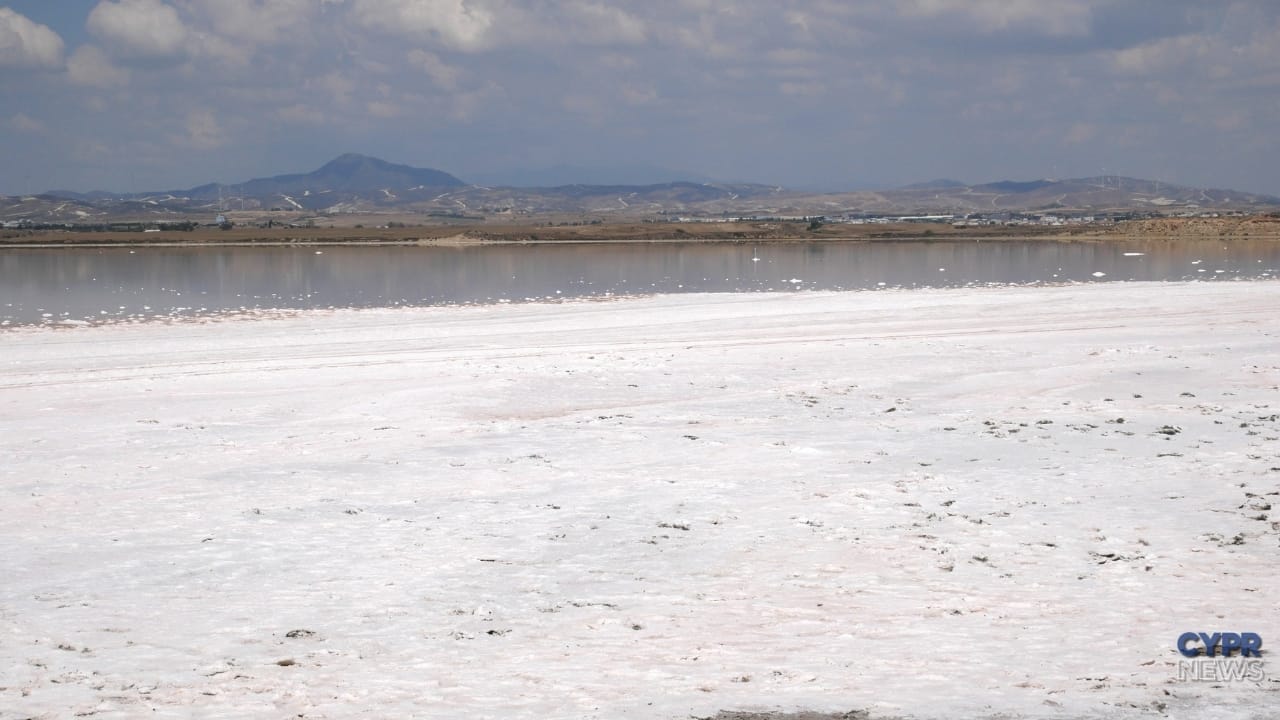
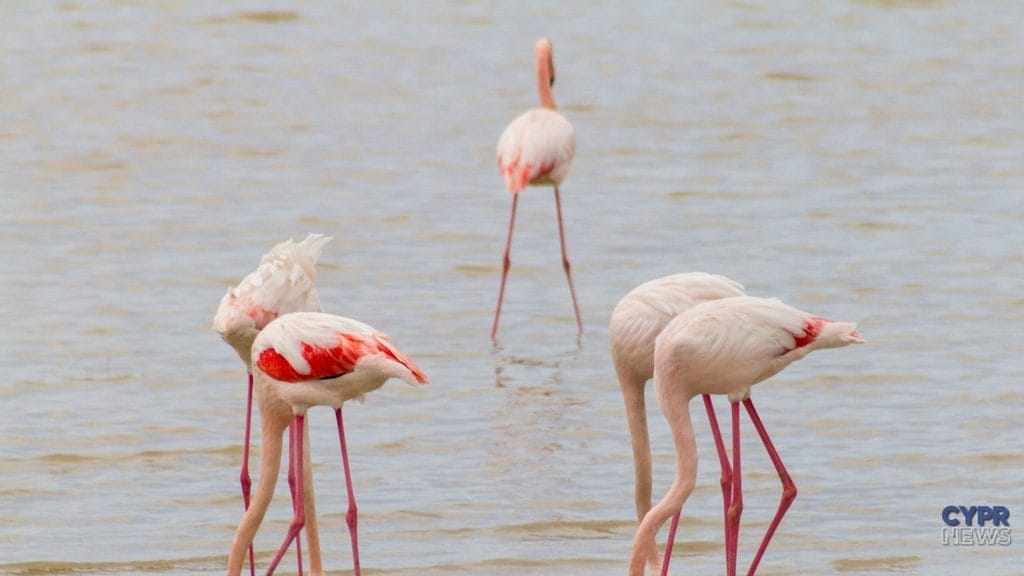
Larnaca Salt Lake Today, we associate it primarily with hibernating flamingos, a white layer of salt, and the Hala Sultan Tekke complex standing on the shore. It's hard to imagine that some 3,500 years ago, the landscape looked completely different.
In the Late Bronze Age, today's lake was connected to the sea, forming a sheltered harbor lagoon. A large trading city developed on its shores, which for hundreds of years engaged in trade encompassing much of the contemporary world.
This is the most important part of this story.
During the Bronze Age, the area now known as Salt Lake had an open connection with the Mediterranean Sea, creating a naturally sheltered harbor where trading ships could dock.
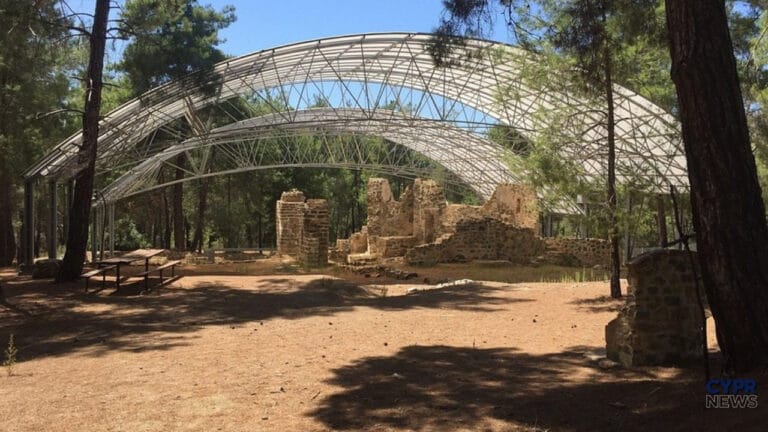
Right next to it there was a city now described by archaeologists as Dromolaxia-Vyzatzia/Hala Sultan Tekke. Its ancient name is unknown.
The site occupied at least 25 hectares. The first phase of settlement dates to approximately 1650–1630 BCE, and the city functioned for nearly five centuries. It was finally abandoned around 1150 BCE.
So it was not a small fishing settlement.
It was one of the most important port cities of the Late Bronze Age in Cyprus.
The scale of the city's trade contacts is very impressive.
Archaeological excavations have uncovered objects from mainland Greece, Crete, other Aegean islands, Egypt, Anatolia and the Levant.
However, the list is much longer.
In the graves of the inhabitants they also found lapis lazuli from what is now Afghanistan, carnelian associated with India, and amber from the Baltic SeaGold jewelry, ivory objects, bronze weapons, seals, and a large number of imported vessels were also discovered.
Around 3,300–3,500 years ago, in the place where we now see flamingos and airplanes coming in to land, there was a city connected by a trade network with regions thousands of kilometers away.
This shows how developed exchange was in the Late Bronze Age.
Such an important port was not created by accident.
One of the greatest riches of ancient Cyprus was copperThe wealth of the inhabitants of Hala Sultan Tekke was probably largely related to its processing and export.
Excavations have uncovered the remains of furnaces, slag, ore fragments, and crucibles used in metalworking. The richly furnished graves may have belonged to families that controlled production and international trade.
Cypriot copper found its way far beyond the island. Archaeologists have found distinctive ingots in various parts of the Mediterranean basin, resembling stretched ox hide. These are referred to as oxhide ingots.
Their shape likely facilitated the transportation of heavy metal. Protruding sections were created on both sides of the bar, which could be grasped during handling.
The city was more advanced than the term "Bronze Age settlement" might suggest.
Archaeologists discovered a drainage system connecting the buildings to a larger canal. The Department of Antiquities described this system as exceptionally advanced compared to other known sites from this period in Cyprus.
So we have a port, extensive development, metal production, imported luxury goods and organized water management.
It looks less and less like a small settlement and more and more like a large Mediterranean economic center.
The city was abandoned at the end of the Late Bronze Age. Its decline is part of a period of significant change that affected many centers in the eastern Mediterranean at that time.
Later, the landscape itself also changed.
The former connection to the sea gradually silted up. Sediments deposited by the water cut off the port lagoon from the open sea until the natural harbor ceased to exist.
This is how, over time, the area we know today as the Larnaca Salt Lakes complex was formed.
Simply put:
First there was a port here, and only later a lake.
When the port ceased to exist, the place still had great economic importance.
This time because of the salt.
Water that appeared in the lake during the cooler months evaporated during the hot Cypriot summers. A layer of salt remained on the dried surface, which was collected and traded for centuries.
In the Middle Ages, Larnaca salt was an important export product. Its extraction and sale were subject to government control and taxation.
The raw material was collected from the lake's surface, transported to the shore, and piled into large piles. Old photographs show workers and animals transporting salt through a landscape that is now primarily associated with a nature reserve.
This is not a story that ends in the very distant past.
The last commercial salt harvest in Larnaca took place in 1986.
Many contemporary inhabitants of Cyprus still remember the period when the lake was a place where raw materials were regularly obtained.
The creation of the salt lake is associated with the local legend of Saint Lazarus.
According to tradition, Lazarus asked the vineyard owner for food and water. The woman refused, claiming her vines had withered. Lazarus then caused the place to turn into a salt lake.
This is, of course, a legend.
The scientific explanation is less dramatic. Salinity is related to the penetration of saltwater through the porous substrate between the lake and the sea, and to very intense evaporation.
When the water disappears in summer, the minerals dissolved in it remain on the surface.
The most characteristic monument currently standing by the lake is Hala Sultan Tekke.
However, it is necessary to clearly distinguish between two eras.
The ancient port city existed for over two thousand years before the construction of the complex visible today. The first structure associated with the tomb of Umm Haram was erected around 1760. The mosque and other buildings were built in stages, with the complex taking its current form in the early 19th century.
The site is associated with Umm Haram, who, according to Muslim tradition, died in the area in the 7th century. Her grave became a place of worship, around which a sanctuary was built in Ottoman times.
In a relatively small area, completely different stories meet:
The history of the ancient port is not yet fully understood.
Excavations carried out in May and June 2025 yielded further richly furnished graves from the 14th century BC. Their discovery was announced in early 2026.
The burial chambers contained the remains of numerous individuals and numerous artifacts from Cyprus and other regions. The finds provide new information about burial customs, the social status of the inhabitants, and the city's international relations.
At the same time, the wider surroundings of the former site are being explored. Archaeologists are using geophysical methods, including magnetometry, to detect the remains of buildings and other traces of human activity without the need to immediately excavate the entire area.
Each subsequent season may therefore change or supplement the current image of the city.
Today we see a wide, flat space.
In winter, water and thousands of birds appear. In summer, the dry bottom and a light layer of salt remain. In the background stands the Hala Sultan Tekke, and nearby lies the airport runway.
About 3,500 years ago the landscape looked completely different.
Ships approached the shore, loading Cypriot copper onto them. Ceramics, ornaments, raw materials, and luxury goods were brought from distant regions.
There was a large city on the coast connected to a trade network stretching from the Baltic Sea to India and Afghanistan.
That's why the Larnaca Salt Lake is worth seeing not only as a place where flamingos appear in winter.
It is also a remnant of the landscape that housed one of the most important ports of the Late Bronze Age in Cyprus.
Sources: Department of Antiquities of the Republic of Cyprus, Deputy Ministry of Culture, Deputy Ministry of Tourism – Visit Cyprus, Larnaka Tourism Board, The New Swedish Cyprus Expedition, Vrije Universiteit Brussel.