Supported by


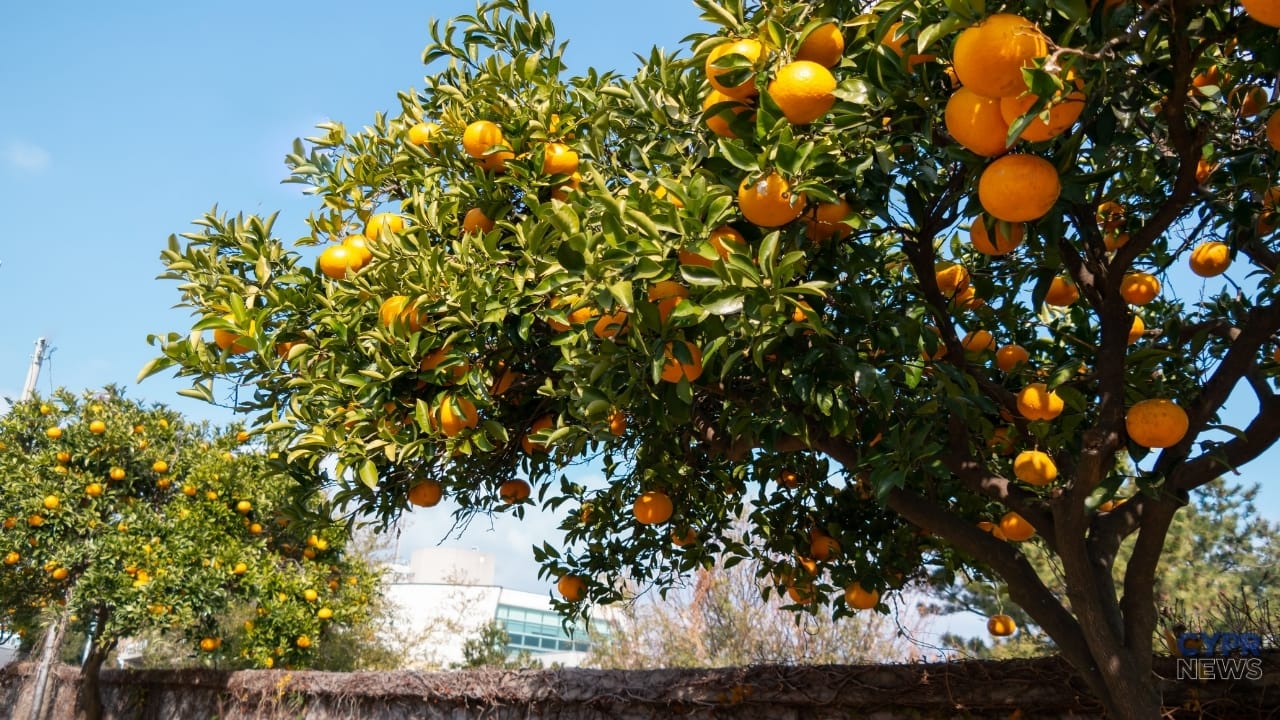
The street fruit in Cyprus can surprise new residents and tourists alike. Small "tangerines" hang on the greenbelts, lemons ripen above the sidewalks, and oranges, grapefruits, and pomelo-like fruits lie beneath the trees. However, this doesn't mean they're all free to pick.
A tree standing on the street may belong to the municipality, a nearby homeowner, or grow on private property. Moreover, the small orange fruit is often not sweet tangerines at all. It's bitter oranges, planted primarily for ornamental purposes.
The most characteristic are the small orange fruits visible along sidewalks, in parks, on roundabouts and road dividers.
Very often it is Citrus aurantium, or bitter orange, also called Seville orange. In Cyprus you can find the term kitromilo, while in Greek the name is also used nerantzi.
The Cyprus Department of Forests lists the bitter orange among trees suitable for planting along sidewalks, in parks, and gardens. Its fruit, leaves, and flowers are primarily ornamental. The department cites falling fruit as one of the problems associated with this species.
The sight of a sidewalk strewn with small oranges doesn't necessarily mean someone forgot to harvest their crops. The tree may have been planted primarily as a feature of urban greenery.
A person expecting a sweet and juicy fruit may experience an unpleasant surprise.
Visit Cyprus describes kitromilo as a bitter orange, not usually eaten raw. However, the fruit has culinary uses, including marmalades and glyka tou koutaliou, traditional Cypriot sweets served on a spoon.
Removing the characteristic bitterness requires proper preparation. The fruit or its peel is repeatedly boiled and soaked in water. Only then are they combined with a sugar syrup.
This may explain why locals don't pick the fruit, which from a distance looks like perfect tangerines. Eaten straight from the tree, it's so bitter that most people don't want to eat another one.
Not every orange tree is a bitter orange. Indeed, Cypriot streets, houses, and old gardens also feature:
The biggest problem is determining who owns a particular tree.
It may grow on the side of private property, even though its branches extend above the sidewalk. Sometimes it has been planted by a resident in a public space, but remains under the care of the municipality. Other trees are indeed part of the city's green space.
Just because you can reach the fruit from the sidewalk doesn't mean you can take it.
There is no single, confirmed rule in all Cypriot municipalities that states that anyone can pick fruit from any tree growing in a public space.
Regulations and practice may depend on the specific local government.
Lakatamia is an example. The municipality's published regulations stipulate that residents may enjoy the fruit of mature fruit trees growing in public green spaces.
However, this is a local regulation. It cannot be based on the same rules as those in Nicosia, Limassol, Larnaca, Paphos, or every Cypriot village.
In Paphos, the planting and maintenance of trees on public sidewalks is the responsibility of the municipality. Residents may plant a tree in front of their homes after obtaining permission and following the municipality's guidelines. However, they may not cut down or prune a public tree themselves.
The commune has not published a general declaration allowing all residents to collect fruit from all municipal plantings.
The safest rule is therefore simple: If you don't know who owns the tree and what the rules are in a given municipality, it's better to ask before picking the fruit.
The Cypriot Penal Code explicitly protects agricultural produce and fruit.
Article 255 describes theft as the dishonest taking of another's property without the owner's consent, with the intent to permanently deprive him of that property. Article 265, however, directly addresses the theft of agricultural produce or fruit.
This doesn't mean that the police will prosecute every passerby carrying a single lemon. However, the law illustrates a fundamental principle: a piece of fruit doesn't become someone's property simply because a tree grows by the roadside or its branches overhang the sidewalk.
Particular caution should be exercised near orchards and private plots. Taking fruit without the owner's consent may be considered theft.
Even if picking the fruit is permitted, it should not be eaten directly from the branch.
The State General Laboratory recommends washing fruits and vegetables before eating. This helps reduce dirt and debris on surfaces.
In the case of a tree growing next to a busy road, dust, road grit and other pollutants related to traffic may also accumulate on the skin.
It's also unknown how a specific tree was cared for or whether pesticides were used on it. The lack of fruit sales doesn't automatically mean the tree wasn't sprayed.
It is best to choose healthy, undamaged fruit growing away from intense traffic, and then wash them thoroughly under running water.
Fruit that is crushed, rotten or has been lying on the ground for a long time is not worth taking.
Sometimes the answer is very simple.
Citrus fruits are common on the island, and a single mature tree can produce far more fruit than a homeowner can use. Not everyone makes jams, juices, or preserves from dozens of kilograms of lemons and oranges.
In the case of Citrus aurantium, the reason is even more obvious. The tree is often planted as an ornamental plant, not as part of an urban orchard. Its fruit is attractive, but its bitterness makes it undesirable to eat raw.
What seems like a huge waste to a new resident may simply be an annual problem for city services with cleaning up fruit falling from ornamental trees.
Even a public tree is not always in a place where it is safe to approach.
A green belt between several lanes of traffic is not the place for spontaneous citrus picking. It's not worth crossing a busy road or stopping your car in a prohibited spot just for a single piece of fruit.
Street fruit in Cyprus can come from edible or ornamental trees, whether public or private. Therefore, it's important to determine the species, owner, and local regulations before picking.
And the little “tangerines” hanging over the green belt?
It's very possible they're bitter oranges – definitely nicer to look at than to eat straight from the tree.
Sources: Department of Forests, Department of Agriculture, State General Laboratory, Visit Cyprus, Cyprus Food Museum, Criminal Code CAP.154, Municipality of Lakatamia, Municipality of Paphos.