Supported by


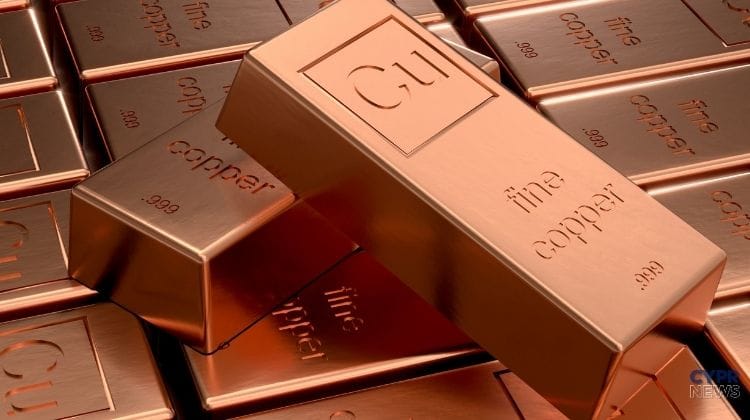
Copper in Cyprus played such a significant role that its history was even recorded in the language. In Roman times, the metal from the island was referred to as aes cyprium – "metal from Cyprus". Over time, the name was shortened to cuprum, from which the English word, among others, comes from copper.
But this is much more than a linguistic curiosity. For centuries, the island was one of the most important producers and exporters of copper in the ancient world. The metal mined in the Troodos region spread far beyond its borders and contributed to the development of civilization throughout the eastern Mediterranean.
The story begins long before the first humans appeared.
About 90 million years ago, the rocks that now form the Troodos Massif were at the bottom of the former Tethys Ocean. Volcanic activity and the circulation of very hot water through the rocks led to the concentration of minerals containing, among other things, copper and iron.
Later geological processes raised a section of the former ocean floor above the sea surface, placing the deposits in a location accessible to humans thousands of years later.
This is why the history of Cypriot copper is also the history of Troodos.
Archaeologists have found copper ornaments and tools on the island dating back to 4th millennium BC Initially, naturally occurring metallic copper was used, which could be found without a complicated smelting process.
Over time, the inhabitants learned to mine ore, smelt metal, and create alloys.
Cyprus had a huge advantage: large deposits and a location that allowed the product to be shipped by sea to the most important centers of the world at that time.
During the Bronze Age, the island's importance grew with the demand for metal for the production of weapons, tools, vessels and everyday objects.
Some of the earliest written records of Cypriot copper exports are found in cuneiform tablets from Mari, in present-day Syria. They date from the 18th century BCE.
Even more detailed information is preserved in correspondence from Tell el-Amarna in Egypt. Documents from the 14th century BC describe copper shipments sent to Egypt by rulers associated with Cyprus.
So it was not a local raw material used exclusively by the island's inhabitants.
It was part of international trade.
In the Late Bronze Age, copper was exported, among other things, in characteristic bars, which archaeologists today call oxhide ingots.
Their shape resembles a stretched ox hide. A typical block weighed approximately 22 to 29 kilograms, and the form was used for approximately five centuries. Hundreds of similar bars have been found at archaeological sites and shipwrecks in various parts of the Mediterranean.
One of the most spectacular examples comes from the Uluburun wreck off the coast of present-day Turkey.
The ship that sank at the end of the 14th century BC was carrying over 10 tons of Cypriot copper.
It's worth knowing
The distinctive shape of the bars likely facilitated their transportation. The protruding corners allowed for gripping and carrying a heavy piece of metal much more easily than a plain, smooth block.
This is where a little confusion often occurs.
You can find the statement that Cyprus got its name from copperThe well-documented linguistic connection, however, runs the other way.
The Romans called the metal that came from the island aes cyprium. Later, a shorter one was used. cypriumand then cuprum.
This is from cuprum the chemical symbol for copper comes from – Cu – and many later names for this metal.
This does not automatically mean that we have thus explained the original origin of the Greek word itself. Kypros. It is certain, however, that the name of the island was perpetuated in the name of copper.
This is quite an extraordinary heritage for a small Mediterranean island.
The scale of the ancient works is best shown by what remains after the smelting.
The official Cyprus Copper Itinerary states that in the Troodos formation area there are about 100 cinder clusters being waste from copper production.
Their total mass was estimated at approximately 4 million tons. According to the same data, they were created over a period of about three thousand years and were associated with a production estimated at about 200 thousand tons of copper.
For an archaeologist, such a waste heap is something very valuable.
It shows that we are not dealing with small, sporadic smelting attempts. Production must have taken place on a massive scale for ancient times.
Traces of this history can still be seen in the landscape.
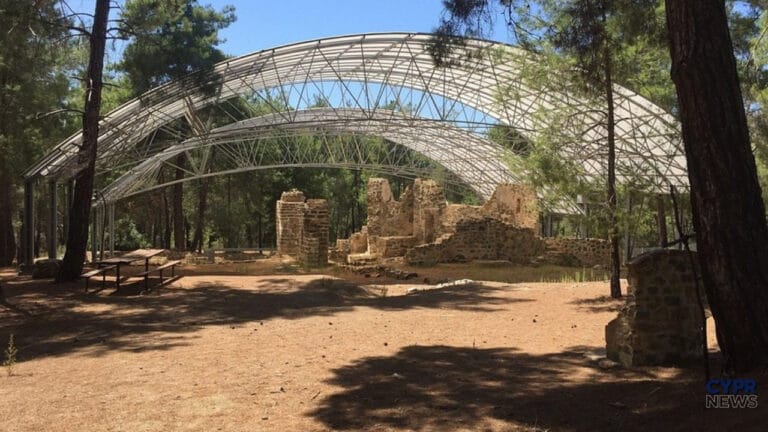
The official Copper Cultural Route leads through the areas of Sia, Mathiatis, Agia Varvara, Katydata, and Skouriotissa, among others. In many places, the characteristic yellow, red, and brown rocks associated with ore mineralization are striking.
But copper also remained in a much more everyday place.
In traditional Cypriot crafts it is still used to make pots, jugs and mbriki – small vessels with a long handle used to prepare Cypriot coffee.
It's hard to imagine a more everyday reminder of several thousand years of history.
Today we look at Troodos primarily as mountains, forests, villages and a place to escape the summer heat.
A few thousand years ago, the world looked at the same area completely differently.
Beneath the rocks lay the raw material that developing states and cities needed.
Copper attracted merchants, fueled trade, and connected the island with Egypt, the Levant, and other parts of the Mediterranean. Visit Cyprus' official website clearly states its importance: for many centuries, Cyprus was the largest producer and exporter of this metal to the ancient world.
And after thousands of years, another extraordinary trace remains.
Every time someone speaks English copper, uses a word whose history leads right here.
To Cyprus.
The material was prepared on the basis of information from the Deputy Ministry of Tourism – Visit Cyprus, the Department of Antiquities and materials from The Metropolitan Museum of Art on the history of Cypriot metallurgy.