Supported by


Carob in Cyprus For centuries, it was much more than just an unassuming pod growing on a tree. It was once a major export and source of income, earning it the nickname "the black gold of Cyprus." Today, it's making a comeback in the kitchen in the form of syrup, flour, and traditional sweets.
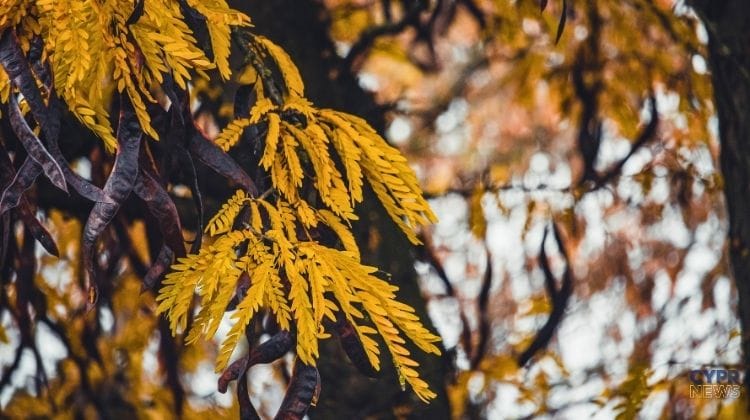
August is a good time to look out for it. Official tourist information states that the pod harvest begins in August and can last until November. In many places, you can see the long, dark brown fruit hanging from the characteristic trees.
Carob, or the fruit of the carob tree (Ceratonia siliqua), has been associated with the eastern Mediterranean for thousands of years. The official Visit Cyprus website states that the plant has been cultivated on the island for around 4,000 years.
However, their greatest economic importance came much later. For a long time, the pods were one of the island's most important exports. They were durable, easily transported, and had many uses. It was their commercial value that led to their being referred to as "black gold."
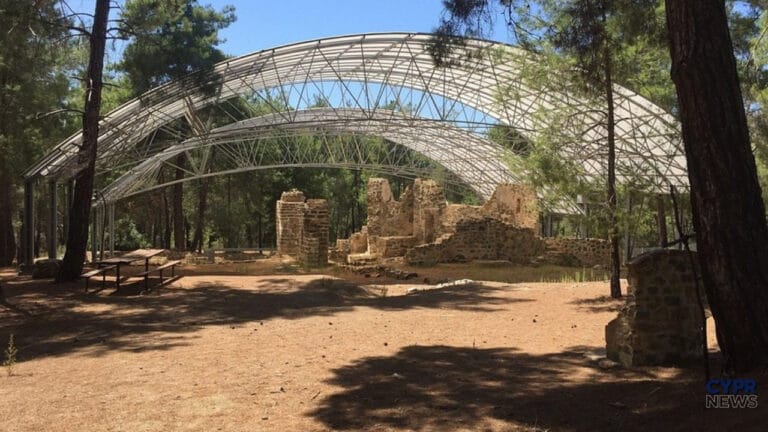
Traces of this history can still be seen in Limassol. The old carob mill near the medieval castle was built in 1900, when the carob trade was significant. The machinery used to process it has been preserved there.
Carob has also left its mark in other places. Visit Cyprus notes that the former warehouses in Pissouri were used to store carob pods for export, and some of these stone buildings still survive today.
The dark brown fruit looks rather inconspicuous, but it conceals sweet flesh surrounding hard seeds.
The pods are traditionally used to prepare a thick syrup called haroupomelo or teratsomeloIn Polish materials, you may encounter the terms "carob syrup" or "carob molasses." It is made by long-boiling crushed carob pods with water, then separating the liquid and further thickening it.
Another traditional product is pastels from AnogyraThe thick carob pulp is repeatedly stretched and kneaded until a distinctive sweet delicacy is created. Anogyra remains one of the places most closely associated with this tradition to this day.
Carob is also used to produce flour, baked goods, sweets, and beverages. Official tourist materials even mention its ancient use in the production of medicines and photographic plates.
This is one of the most fascinating stories related to this plant.
The name of the unit used to measure the weight of gemstones actually has an etymological connection to carob seeds. It goes back to Arabic qīrāṭ to Greek kerátion, meaning, among other things, carob seed. The seeds were formerly used as small weights.
A popular story, however, goes a step further and says that each carob seed weighs almost exactly the same. Scientific research shows that this is too good a story.
Scientists have examined the seed weights and found that they are not exceptionally uniform. While they may have served as a practical reference point, the myth that each seed weighs nearly identically is unfounded.
It's worth knowing
The association of carob with "carat" is true, but the popular claim that all its seeds weigh exactly 0.2 g is an oversimplification. A modern carat is 0.2 g, but natural seeds vary in weight.
Carob is not a homogeneous crop here.
Research conducted as part of the University of Cyprus project identified three locally recognized types: Tylliria, Koumpota and KountourkaScientists analyzed their properties, composition, and origin, trying to create a basis for the redevelopment of this branch of agriculture.
This is precisely what the project, named – not by accident – was for: "Black Gold"The University of Cyprus collaborated on this project with the Ministry of Agriculture, the Agricultural Research Institute, and a state laboratory, among others. The goal was not only to study the traditional plant but also to develop new products and increase its economic importance.
History has thus come full circle. A product that was once a pillar of exports has, years later, become the subject of modern scientific research.
In Anogyra and other carob-growing areas, harvesting lasts from August to November. The pods can then be used to produce syrup, flour, and traditional sweets.
The tradition lives on. The official calendar of events for 2026 even includes a Carob Festival scheduled for September 4th in Pegeia.
Therefore, the dark brown pods visible on trees at the end of summer are not just another element of the dry landscape.
Until relatively recently, they meant money, trade and the support of many families.
And that is why the carob tree earned the name that has survived to this day – the black gold of Cyprus.
The material was prepared on the basis of information from the Deputy Ministry of Tourism, the Department of Agriculture, the Agricultural Research Institute, the University of Cyprus and scientific publications on the history and properties of carob.