Supported by


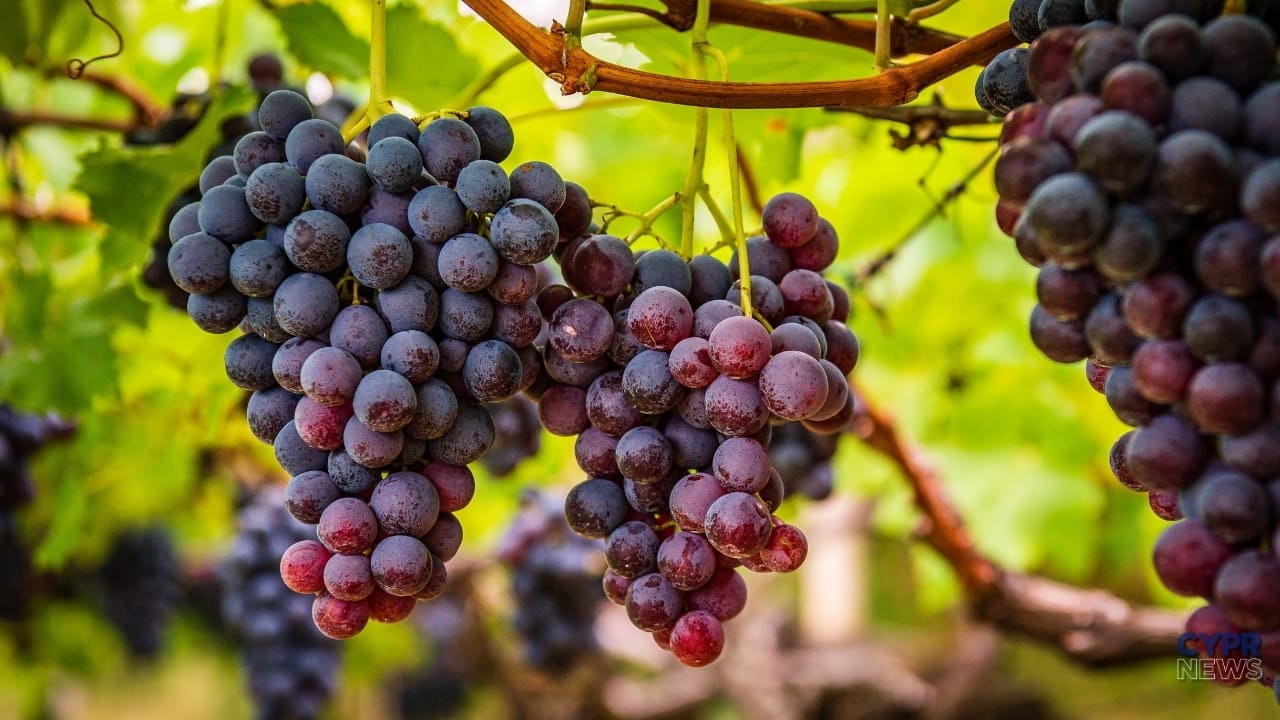
Green, yellowish, pink, red, purple, and almost black – in September, you can see grapes in a whole range of colors on Cypriot shelves. These aren't just different stages of ripening. Many varieties are grown on the island, both traditional Cypriot varieties and those imported from other parts of the world.
The most famous native varieties are Xynisteri and Mavro, primarily associated with wine production. However, Cyprus also has traditional table grapes such as Veriko and Sideritis, and the local Agricultural Research Institute is researching dozens of different varieties specifically for food.
In the store, the differences are immediately apparent. Some clusters have large, light green fruit, others are pink or red, and the darkest are a deep purple.
This is what Cypriot grapes look like, which we recorded in one of the shops:
The color of the fruit depends primarily on the variety. Dark grapes have more anthocyanin pigments in their skins, while varieties referred to in winemaking as "white" typically have green or yellowish skins.
This is why two ripe grapes can look completely different even though they were harvested at the same time.
When one begins to learn about Cypriot grapes, two names come to mind almost immediately.
Xynisteri This is the most important native white variety. Its fruit is light-colored, and the grape is one of the pillars of local winemaking.
Mavro, whose name simply means "black" in Greek, produces darker fruit. It is a large and juicy variety, traditionally used for both wine and other grape products.
Both varieties are also the basis for the production of the famous Commandaria. Only Xynisteri and Mavro are used in its production, and the harvested fruit is left in the sun to increase its sugar concentration.
However, not all local varieties make it to wineries.
The Cyprus Agricultural Research Institute lists Veriko and Sideritis as native table grape varietiesThey are still being tested for fruit quality, yield, and adaptation to various growing conditions.
Veriko is particularly interesting. Traditionally, it has large, crisp, pinkish fruit and is primarily intended for direct consumption, not for wine production. The Cyprus Food Museum indicates that the variety was also often planted near houses in the past, where the sprawling vines provided additional shade.
The diversity visible in stores is not accidental.
The Agricultural Research Institute is conducting experiments with varieties such as Red Globe, Crimson Seedless, Fantasy Seedless, Black Emerald, Autumn Royal, Flame Seedless, Victoria or Italia.
The Acheleia Experimental Station currently maintains a collection 53 varieties of table grapes, for research and preservation of genetic material.
This clearly shows that the term "Cypriot grapes" does not refer to one variety or one color.
Some are native, others have been introduced to the island but are normally cultivated here.
Cyprus has another remarkable chapter in the history of the grapevine.
In the 19th century, European vineyards were devastated by phylloxera, a small pest that attacks the roots of grapevines. Cyprus escaped this epidemic, allowing many old local varieties to survive without the need for mass replacement of traditional vines.
This is one of the reasons why Cypriot winemaking can today rely on varieties with a very long history.
The island's wine-growing tradition dates back thousands of years, and archaeological finds related to wine production in the Limassol area date back over 6,000 years.
Grapes have many more uses in Cypriot cuisine.
The must is prepared from palouze – thick grape dessert – and soutzoukos, i.e. characteristic strings of almonds or nuts covered with successive layers of concentrated must.
Of course, grapes are also used to make wine, Commandaria and zivania.
But at this time of year, the easiest way to experience local diversity is much easier.
Just walk up to the fruit aisle in the store and see how many different colors one of Cyprus' most traditional crops can have.
Sources: Agricultural Research Institute of Cyprus, Deputy Ministry of Tourism – Visit Cyprus, Cyprus Food Museum, Department of Agriculture.