Supported by


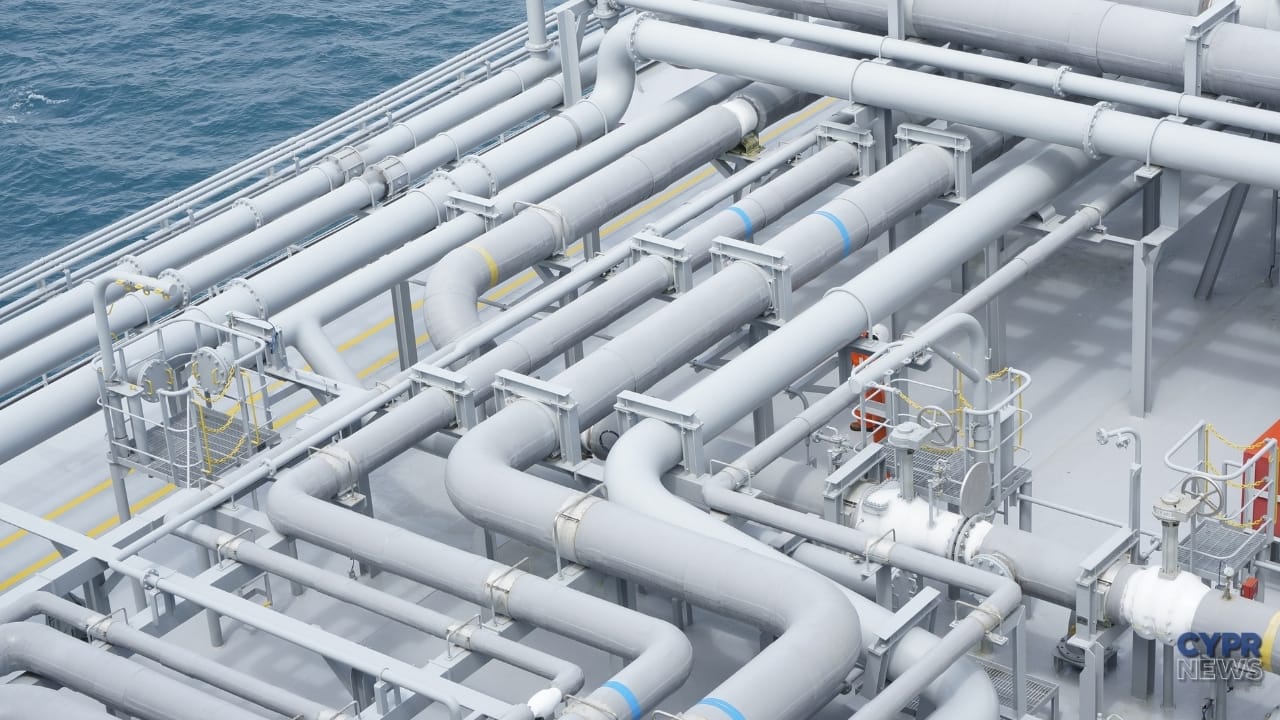
Turkey intends to build an offshore gas pipeline to the Teknetik power plant in northern Cyprus. The planned route is approximately 101 kilometers long, 97 kilometers of which will run under the Levantine Sea. The Republic of Cyprus considers the agreement a violation of its sovereignty and has filed a protest with the United Nations.
Turkish Vice President Cevdet Yılmaz spoke again about the project on Friday, arriving on a two-day visit to the island. Referring to the reactions from Nicosia and the European Union, he stated that the planned investment had apparently "upset some people."
The planned link is to start in the Anamur region in the Turkish province of Mersin and end at the Teknecik power plant, located east of Kyrenia.
According to the information provided, the project involves the installation of two parallel pipes, each with a diameter of 56 centimeters. The system will enable the transmission of gas between Turkey and the northern part of the island.
The agreement regarding the preparation of the investment was signed on July 10, 2026. The signatories were representatives of Turkey and the Turkish Cypriot authorities.
Turkish Energy Minister Alparslan Bayraktar argued that the gas pipeline would increase energy security in the northern part of the island and enable reductions in electricity generation costs.
Representatives of the internationally unrecognized authorities in the north are presenting the investment as a project of historic significance. "Prime Minister" Ünal Üstel has announced that it will also benefit future generations of Turkish Cypriots.
Ankara's announcements do not mean that the pipeline is already under construction along its entire planned route. The project remains in the preparation, research, and negotiation stages.
In July, Türkiye issued a NAVTEX navigation advisory regarding research being conducted along the planned route. These activities were also met with opposition from the Republic of Cyprus.
Turkish media reported that the gas pipeline could be launched in 2028. However, no full schedule, final cost estimate, or detailed financing model for the project were presented.
No date has been given for the commencement of the main construction work. Therefore, at this stage, we should speak of a project in development, rather than an operational or nearly completed connection.
The authorities of the Republic of Cyprus do not recognize the agreement concluded by Turkey with the administration operating in the northern part of the island.
Cyprus's Permanent Representative to the UN, Maria Michael, sent a letter to the UN Secretary-General António Guterres regarding this matter. Nicosia argues that the unilaterally declared "Turkish Republic of Northern Cyprus" lacks international legal personality and therefore cannot conclude valid agreements concerning the territory of the Republic of Cyprus.
Nicosia described Turkey's actions as a deliberate provocation, a violation of international law and an interference with the sovereign rights of the Republic of Cyprus.
The European Union also criticized the project. EU foreign policy chief Kaja Kallas called on Turkey to respect the sovereignty and sovereign rights of the Republic of Cyprus.
The planned gas pipeline is not only of economic importance. On an island divided since 1974, any major infrastructure investment implemented without the consent of the Republic of Cyprus becomes part of a broader political conflict.
Türkiye presents the project as a way to develop the energy infrastructure of northern Cyprus, reduce energy production costs and reduce the power plant's dependence on currently used fuels.
Nicosia, on the other hand, sees it as an attempt to permanently connect the northern part of the island with the Turkish energy system and to further strengthen structures unrecognized by the international community.
Similar controversy previously surrounded the construction of an undersea pipeline supplying water from Turkey. The new project would expand direct infrastructure connections to the energy sector.
The project will not currently impact energy supplies or residents' bills. Before gas transmission can begin, studies would need to be conducted, financing would need to be secured, pipes would need to be manufactured and laid, and the Teknetik power plant would need to be adapted to the new fuel.
It is also unclear whether the diplomatic dispute will affect the investment schedule. Türkiye has indicated it intends to continue preparations, while the Republic of Cyprus has announced further action in international forums.
The gas pipeline to northern Cyprus therefore remains a technical project with clear political significance. Its development will be monitored not only by the island's inhabitants but also by European Union institutions and the United Nations.
Sources: Cyprus Mail, Anadolu Agency, Turkish Minute, United Nations.