Supported by


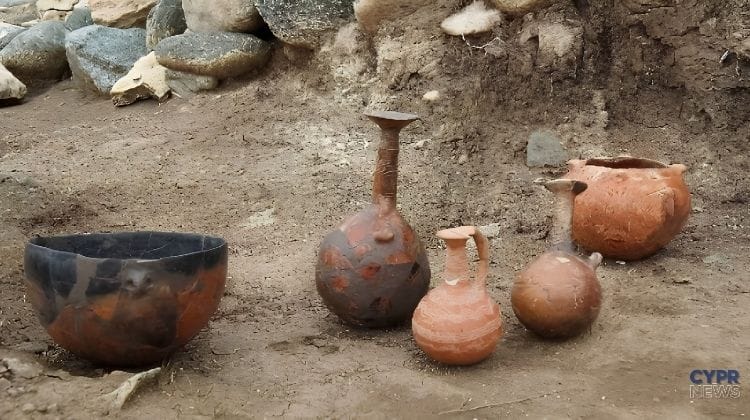
Perfumes from Pyrgos This is one of the most extraordinary stories related to the archaeology of Cyprus. Near the present-day town of Pyrgos, a Bronze Age site was discovered where researchers identified an installation associated with the production of fragrant oils and perfumes.
It sounds like a detail from a museum display case, but the scale of the discovery is much larger. This isn't a single bottle found in a grave, but a fragment of an entire production facility. This is precisely why Pyrgos so often appears in stories about the "world's oldest perfumes."
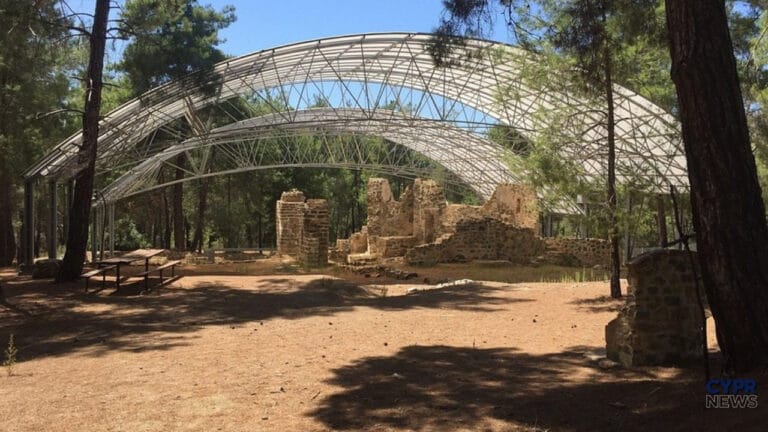
The Pyrgos-Mavroraki site was an industrial and trading settlement from the Early and Middle Bronze Age. Researchers link it not only with perfumes but also with metallurgy, weaving, wine, cosmetics, and olive oil processing.
In the perfume section, equipment was identified that allows us to speak of actual production, not just the use of fragrant substances. The project's official website lists, among other things, vessels, funnels, perfume bottles, stone tools, and even elements interpreted as distillation apparatus.
It was this set of finds that made Pyrgos one of the most interesting points on the archaeological map of Cyprus.
The most important thing is that it wasn't just finished perfume vessels that were found at Pyrgos. The official description of the research clearly states installations for the production of aromatic oils from the Bronze Age. Excavations of the sector related to scent processing lasted from 2000 to 2003.
Subsequent archaeometric analyses and studies of plant material revealed that plants from the Cypriot flora were used in production. Importantly, no foreign ingredients were identified in the samples examined.
This adds an even more interesting dimension to the discovery. It's not just about the technology itself, but also about the local Cypriot aromatic base.
The official description of the Pyrgos-Mavroraki excavations emphasizes that the perfumery was located at the center of a larger workshop area. Other workshops also operated within the same complex, and a large olive mill supplied oil to various branches of production.
This is a crucial clue. Perfumes were not a strange curiosity on the fringes of settlement life. They were part of a broader system of production and trade.
So you could say that at Pyrgos, fragrance was a product, not just a luxury accessory.
It's worth knowing
Many popular texts present Pyrgos as the site of the discovery of the world's oldest perfumery. It is more cautious and honest to speak of one of the oldest known sites associated with the production of perfumes and fragrant oils.
This, of course, cannot be recreated with absolute certainty in the same way that a modern fragrance can be recreated using a ready-made recipe. However, the researchers did not stop at simply describing the findings.
The project's official website states that, following chemical and botanical analyses, archaeological experiments were also conducted. In 2006, replicas of vessels were made and attempts were made to recreate ancient maceration and distillation methods.
The experiments used ingredients such as rosemary, lavender, marjoram, and myrtle. Olive oil or almond oil were also used to blend the aromas. This allowed the researchers to test not only Whether Perfumes were made in Pyrgos, but also How this could look like in practice.
The story of the discovery didn't end with the excavations. Project materials indicate that after 2003, further research, experimental tests, and odor reconstructions were conducted using methods reminiscent of the Bronze Age.
This is an interesting moment, because archaeology ceases to be just a story about shells and walls. It begins to be about something very sensual and immediate—smell.
Perhaps this is why the subject of perfume from Pyrgos captures the imagination so strongly. It's much easier to imagine the ancient world when we not only observe it but also try to understand what it might have smelled like.
The discovery at Pyrgos shows that several thousand years ago, Cyprus was not a peripheral island standing on the sidelines of major civilizational processes. On the contrary, it was a place of advanced production, technology, and raw material processing.
If there were workshops related to metals, fabrics, wine, olive oil, cosmetics and perfumes in one settlement, it means that we are talking about a well-organized and specialized community.
And this means that the history of Cyprus smells not only of the sea, resin and herbs.
It also reeks of ambition, craftsmanship and ingenuity of the people who, four thousand years ago, were able to turn plants into a luxury product.
The material was prepared on the basis of information from the Pyrgos-Mavroraki project, Department of Antiquities and research publications related to the analysis of finds and the reconstruction of ancient perfumery techniques.