Supported by


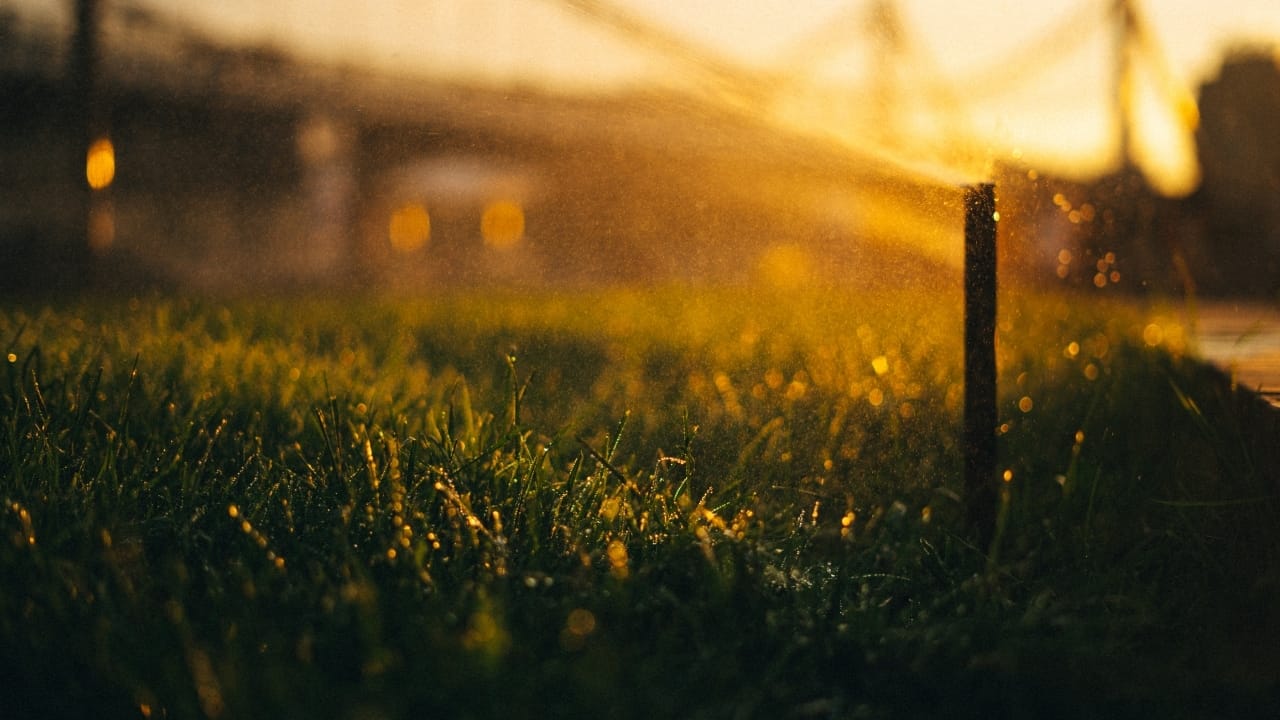
At night, as the streets empty and temperatures drop, irrigation systems in many Cypriot cities are activated. These systems allow lawns, trees, and green spaces to survive months of heat and near-total rainlessness. Importantly, water recycled from sewage treatment, rather than precious drinking water, is used for large-scale irrigation of green spaces. Cyprus has been treating it as an important element of its water balance for years.
That's why sprinklers often operate at night. Cypriot regulations regarding the use of reclaimed water in public green spaces explicitly recommend night-time irrigation using low-head sprinklers and in calm weather. This minimizes pedestrian contact with the water and also reduces evaporation losses.
During the day, you can walk past a lawn or a planted median and not even think about where the greenery comes from.
The answer comes after dark.
Our video shows sprinklers running at night, watering urban plants:
In a climate where there is virtually no rain for many weeks in summer, without regular irrigation most of such vegetation would very quickly lose its green appearance.
The term “reclaimed water” sounds much nicer than “treated wastewater,” but that is precisely the process at hand.
The sewage is sent to a treatment plant, where in Cyprus it is also used third stage of purificationThe water produced in this way is not intended for drinking, but its parameters allow it to be used for, among other things, irrigation of crops and green areas.
This is crucial on an island struggling with a chronic water shortage. Every cubic meter of reclaimed water used to irrigate a park or lawn means that reservoirs or desalinated water, primarily intended for residents, do not need to be used for the same purpose.
Cypriot regulations also require that installations using such water be clearly marked. Network elements should have red markings and information that the water is not suitable for drinking.
CHECK ALSO
Where does the water used on the island today actually come from and why are desalination plants and water reuse playing an increasingly important role?
Where do we get water in Cyprus? Increasingly, it comes from the sea, not from dams.
If someone was walking past the green belt that was being watered at night, they might have noticed one more thing.
Sometimes the water has a rather characteristic, to put it mildly – not very pleasant smell.
This doesn't mean that sprinklers are watering the lawn with untreated sewage. Water intended for such use must undergo required treatment and is subject to specific quality and application guidelines.
However, reclaimed water may contain compounds and substances that give it a different odor than drinking water. The intensity of this odor may also be influenced by storage method, temperature, and network conditions.
This is why the smell itself does not mean that the water is unclean.
An even more interesting solution was found for watering vegetation along some Cypriot highways.
Not everywhere there is a permanent water source piped directly to the greenery. In such places, tankers delivering water for watering plants.
And this is not just an observation from the road.
In 2026, the Forestry Department announced separate tenders for the rental of tankers for watering plants along roads and highways. One of these tenders directly concerns Paphos–Limassol highway, and others include road areas in the districts of Nicosia, Larnaca and Famagusta.
Older tender documentation shows the scale of such an operation. The 26-kilometer stretch of the Limassol-Paphos motorway between Erimi and Petra tou Romiou was expected to involve the use of tankers with a capacity of at least 14 m³ and the transport of up to 112 m³ of water during the watering day.
This year's budget of the Forestry Department also includes funds for maintaining roadside vegetation, including the purchase of water tanker services.
This doesn't mean, however, that every highway is watered daily or that the same system operates everywhere. The method depends on the section and the existing infrastructure.
The system usually operates when most residents are asleep.
That is why when we drive through the city in the morning we see green stripes between roads, trees along the streets and well-kept roundabouts, but much less people wondering, how much water infrastructure is needed to maintain this greenery at 35-40 degrees and months without rain.
In Cyprus, the answer is often: we purify water that can no longer be used for drinking and use it a second time.
And if at 2 a.m. the street sprinklers suddenly start working and you notice a characteristic smell – you will already know why.
Sources: Water Development Department, Department of Forests, eProcurement Republic of Cyprus, Code of Good Agricultural Practice.