Supported by


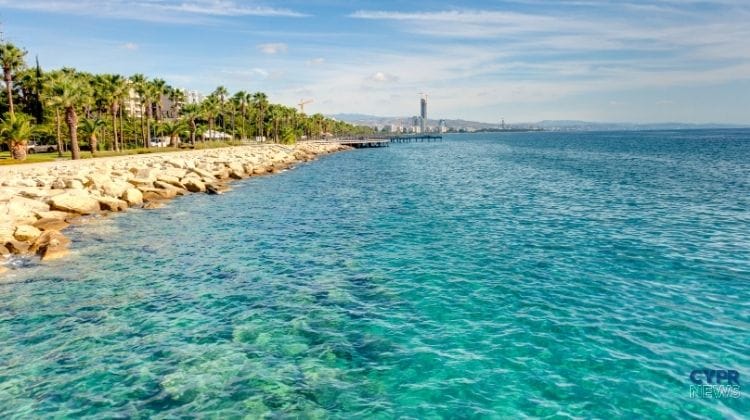
The sea in Limassol has been raising questions from residents for weeks. Foam, surface stains, and reports of possible discharges contrast with survey results showing that inspected bathing areas continue to have excellent water quality.
However, the matter is not closed. The Deputy Ministry of Shipping has prepared a strategic plan for 2026–2027, encompassing 15 actions that will help more accurately determine pollution sources, detect incidents more quickly, and identify those responsible. The first tangible results are expected to be visible before the next summer season.
The Department of Environment responded on Friday, August 28, to reports regarding water quality and the observation of spots and foam off the coast of Limassol.
According to the results available at the time of publication of the announcement the water quality at the inspected bathing areas has not deteriorated and is still classified as excellent.
Inspections are carried out throughout the bathing season – from 1 May to 31 October – in cooperation with the Department of the Environment, the State General Laboratory and sanitary services.
In 2026, monitoring was further expanded in the Limassol and Famagusta districts, and in the Mackenzie area of Larnaca. Samples are collected more frequently than required by minimum regulations.
The good results of bathing areas do not mean that the services ignored unusual phenomena visible on the sea surface.
In places where foam and stains appeared, cleaning is carried out. additional sampling and analysis, regardless of the standard control program.
The Vice-Ministry of Shipping, the Department of Fisheries and Marine Research and the State General Laboratory are involved in the research.
So far no microbiological load was found that could be linked to the observed foaming of the water.
However, the Department of the Environment clearly states that the investigation into the nature and origin of these phenomena is still ongoing.
A separate matter are reports regarding discharges from the sewage treatment plant in Moni.
After receiving the information, the services carried out additional checks and extraordinary sampling.
The research covered the area around the installation and five nearby bathing areas: Kalymnos, Governor’s Beach, Agios Georgios Alamanou, Aoratoi and Panagies.
Increased microbial load was indeed detected, but only in samples taken near the Moni treatment plant.
This site was located away from five monitored bathing areas. No microbiological deterioration of water quality was detected at these bathing areas.
This is an important distinction: a problem identified at the Moni installation does not automatically mean that nearby beaches will be polluted.
And this is where the most interesting part of the whole thing begins.
The discussion regarding the state of the sea off Limassol is not limited to the question of whether laboratory testing of a specific sample exceeds microbiological standards.
In recent weeks, residents have repeatedly reported stains, foam, and other disturbing phenomena. However, the responsible institutions have not always agreed on their source, scale, or even how to classify individual cases.
The Deputy Ministry of Shipping wants to move from responding to individual reports to permanent system for detecting potential sources of pollution.
The strategic plan for 2026–2027 includes 15 actions, and its key elements are specific deadlines, responsibility of individual institutions and measurable results.
Therefore, it is not enough to simply say that "an inspection was carried out." The plan involves recording what was checked, how often, what was found, and what actions were taken.
The plan doesn't single out a single culprit. Instead, potential sources of problems are divided into four main groups:
The aim is to create a map of everything that could potentially affect Limassol Bay.
This will allow the services to check specific sources in the next incident instead of starting the entire process from scratch.
One of the most interesting elements of the plan is the use of new technologies.
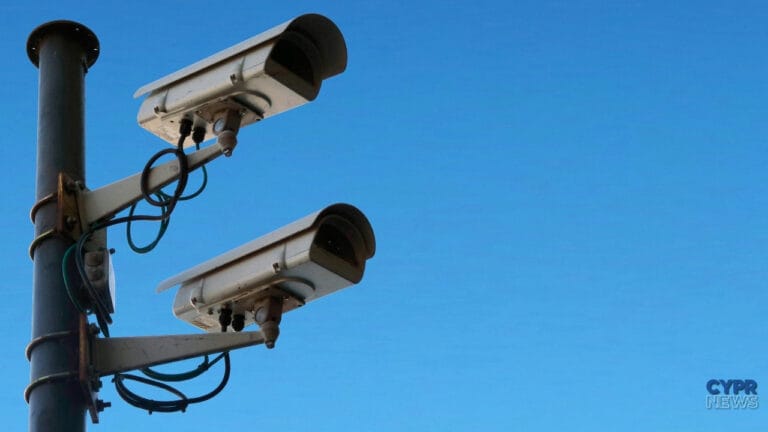
Pilot use is being considered in selected locations. drones, cameras and sensors.
Their task is to detect potential incidents more quickly and collect data that may help determine the source of pollution and, in the case of a violation of regulations, also the perpetrator.
The plan also includes the use of observation boats and divers.
Additionally, more targeted and unannounced inspections will be carried out in ports and marinas, as well as inspections of bunkering, waste management and the method of discharging sewage from vessels.
A very large number of institutions are involved in the entire system.
These include the Department of Fisheries and Marine Research, the Department of Environment, the Ports Authority, the Port and Maritime Police, the JRCC, the Deputy Ministry of Tourism, local administrations, and the Limassol Municipality.
And that's it coordination between them is one of the biggest challenges.
The strategy aims to reduce situations in which each institution only examines the part of the problem that falls within its competence, while the full picture remains unclear.
The plan provides for a common database, defining the responsibilities of individual institutions and metrics to assess whether the actions taken actually bring results.
Here we need to separate two issues very clearly.
The official announcement from the Department of the Environment regarding the quality of bathing areas has been issued on Friday, August 28.
Only a day later did heavy downpours pass through Limassol.
A huge amount of water then flowed from the land into the sea. Footage from CYPRNews taken after the storm clearly shows masses of water of varying shades meeting one another. We also described this in our summary of Saturday's storm.
CHECK ALSO
This is what the effects of Saturday's storms looked like, including the sea near Limassol after heavy rainfall:
https://cyprnews.pl/lodzie-na-cape-greco-rozbite-o-skaly-tragiczny-final-sobotniej-nawalnicy/
Friday's test results cannot be treated as the results of water testing after Saturday's storm.
Water discoloration after heavy rainfall may be due to factors such as soil, sediment, and suspended solids flowing from the land. However, appearance alone cannot determine whether microbial or chemical contamination has occurred.
So today we can say two things at the same time and neither contradicts the other.
The tested bathing areas meet the standards and their water remains classified as of excellent quality. In the five bathing areas inspected in connection with the Moni case, no increased microbiological load was detected.
Simultaneously the origin of recurring spots, foam and other phenomena near the coast still needs to be explained.
If the problem were completely solved, there would be no need to create a 15-point plan, map potential sources, deploy sensors and drones, or tighten controls.
The most important change is to move away from reacting only when residents see something disturbing in the sea.
The new system is intended to allow detect the incident earlier, determine its source and – if a violation of the law has occurred – identify the person responsible.
The first real test of this approach's effectiveness will be next year's summer season. That's when the Deputy Ministry of Shipping expects the strategy to deliver visible results.
Sources: Department of Environment of the Republic of Cyprus, Deputy Ministry of Shipping, Politis