Supported by


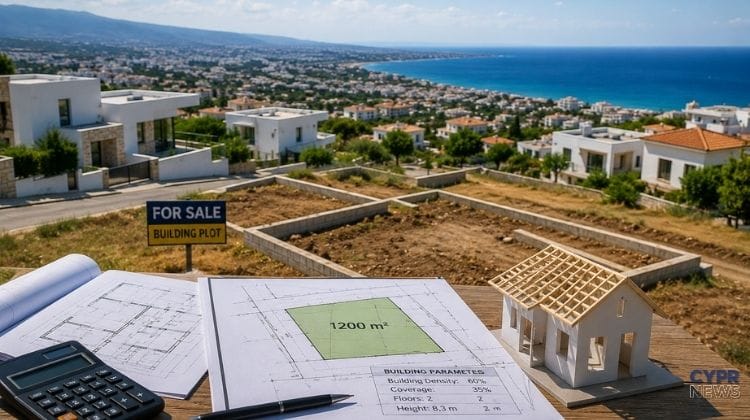
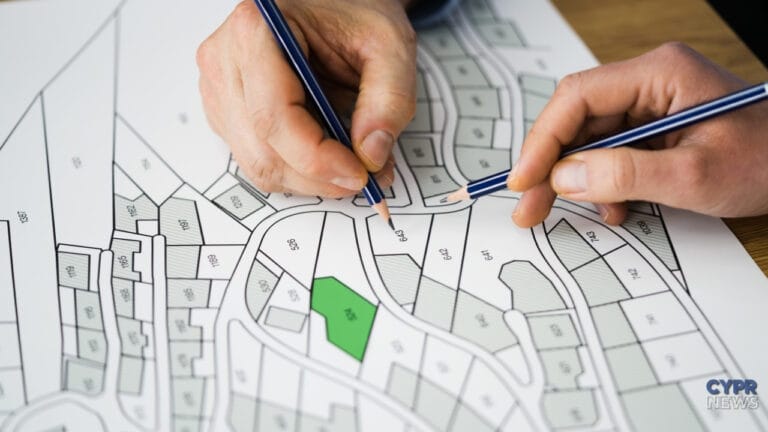
Buying a plot of land in Cyprus often starts with the location, sea views, and land size. However, from a future investment perspective, these factors may be much more important. planning parameters assigned to a specific plotThey determine how large a building can actually be built on it.
One of the most important indicators is building density, or the development factor. Two plots of similar size, even those located very close to each other, may have completely different investment potential due to different parameters.
Building density determines the maximum total area that can be built on a given plot. The indicator is expressed as a percentage and is based on the planning zone to which the land belongs.
For example, a plot of land with an area of 1200 m² with a density coefficient of 60 percent allows for the construction of a total of up to 720 m² surface.
This doesn't mean, however, that a building can occupy 720 m² of plot area. Density refers to the sum of the areas of all floors.
In practice, the same potential can be used in different ways – by building a larger single-story house or a multi-story building.
One of the most common mistakes when choosing land is to assume that a larger plot automatically gives greater building possibilities.
In Cyprus, each plot of land is located in a specific planning zone, and with it, receives specific development parameters. Therefore, two plots of 1,000 or 1,200 m² may represent completely different values for an investor.
One may be suitable for the construction of several residential units, while the other will be suitable primarily for a single house.
Therefore, when comparing offers, the price per square meter of land should not be the only criterion.
In addition to density, you need to pay attention to: coverage, i.e. the maximum part of the plot that can be occupied by buildings at ground level.
This is a very important distinction.
A plot may have a high density, allowing for a large total area to be built, but at the same time have relatively low coverage. In such cases, some of the available space must be distributed among subsequent floors.
In practice, the density and coverage parameters must be analyzed together.
The planning zone determines not only the area of possible development.
Permissible limits are also important number of storeys and maximum height of the buildingThe parameters may be different in the city center, in the suburbs, and in areas further away from urban development.
This can completely change the way the plot is used.
The potential of land on which a multi-story building can be built is different from that of a property designated for low-rise development.
The intended use of the land is also very important.
A large plot of land isn't necessarily more attractive than a much smaller building plot. In the case of agricultural land, development options may be severely limited, and development coefficients may be significantly lower.
Therefore, information about the plot area without knowing its zone and planning parameters says very little about the real potential of the property.
Let's assume that the plot we are interested in has:
Surface area: 1200 m²
Density: 60 percent
The calculation is simple:
1200 m² × 60 percent = 720 m²
This means that a maximum of 720 m² of total area resulting from this ratio can be realized.
Only after taking into account the coverage, the number of permissible storeys, height and other planning principles can we determine what the future investment might look like.
And that is why just asking “how many meters is the plot?” is not enough.
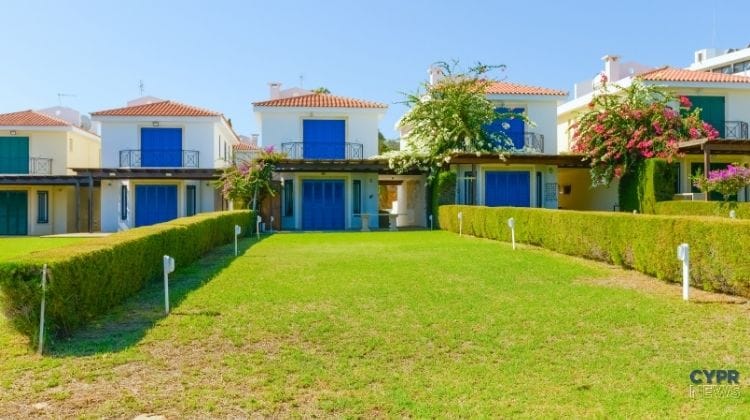
Especially in rapidly developing regions such as Paphos, a plot of land can have a completely different investment value depending on what can actually be built on it.
Land that allows for the construction of several units may be much more interesting for a developer than a larger plot with a very limited development factor.
This also explains why seemingly similar real estate properties can have significantly different prices.
An attractive view, a good location, or proximity to the sea may be a deciding factor in attracting interest in a particular plot of land. However, they should not replace analysis of its parameters.
Before buying, it is worth knowing at least:
Only by putting this information together can you see what you can really do with a given property.
The potential of a plot of land does not mean that construction can begin immediately.
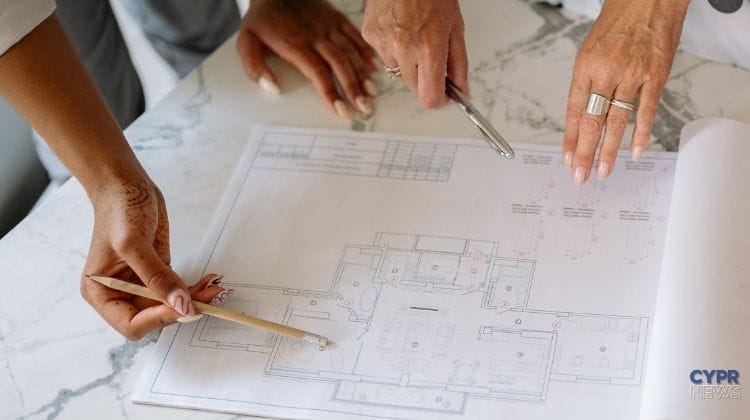
Implementing an investment requires completing appropriate procedures, preparing a project, and obtaining required approvals. The process can take several to several months, depending on the type and scale of the project.
Therefore, a person purchasing land with the intention of quickly implementing the investment should take into account not only the cost of the land and construction itself, but also the time needed to prepare the documentation.
In the case of plots in Cyprus a larger area does not always mean a better investment.
Density, coverage, and zoning may be much more important. These parameters determine how much can be built on a given plot of land, and how.
Therefore, before purchasing a plot of land, it is worth first determining its actual development possibilities and only then comparing the price, location and potential profitability of the investment.