Supported by


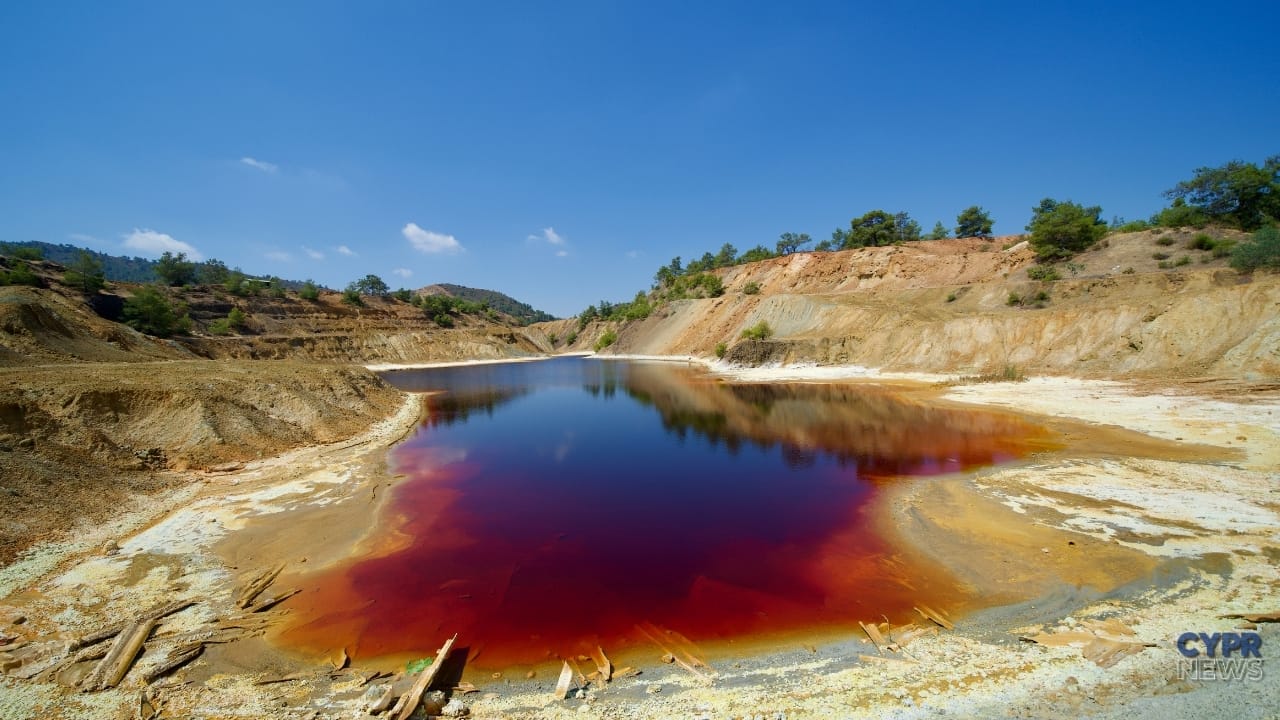
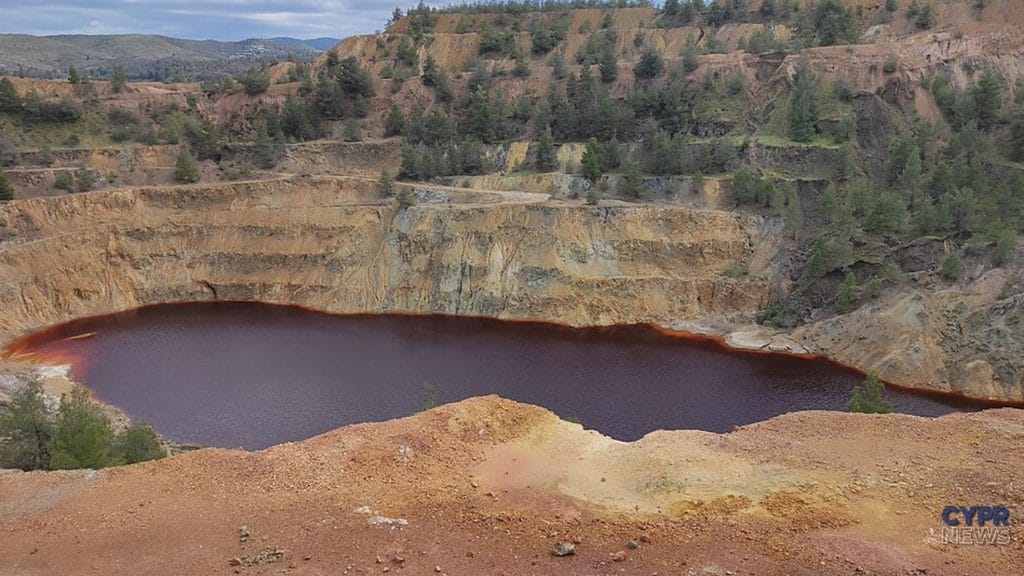
Red Lake in Mitsero It looks almost unreal in photos. Depending on the season, amount of water, and light, its surface can take on shades of red, rust, brown, and sometimes almost black. It is surrounded by bare, orange, and yellowish slopes.
However, this isn't an extraordinary work of nature. The lake was formed in the former Kokkinopezoula open-pit mine. After mining ceased, the massive pit began collecting rainwater, which continues to react with the exposed rocks and remnants of sulfide mineralization to this day.
Kokkinopezoula is located near the village of Mitsero, in the Nicosia district.
According to the Geological Survey Department, the mine operated in the years 1953–1966. The mining was carried out using the open-pit method, and during this time approximately 5.58 million tons of ore containing on average about 24 percent sulfur.
The ore was processed at a plant operating in Mitsero. The resulting concentrate was then transported to Karavostasi, from where it was shipped by ship.
Today, a huge crater remains after industrial activity. It is at its bottom that water collects, known as the Red Lake, or Kokkinolimni.
The answer lies in the rocks.
Kokkinopezoula was a sulphide ore mine, in which one of the most important minerals was pyrite – FeS₂.
When pyrite-containing rock is exposed and comes into contact with oxygen and water, the oxidation process begins. Subsequent reactions produce sulfuric acid, among other substances, and release sulfates, iron, and other elements into the water.
This phenomenon is called acidic mine drainage, in English acid mine drainage.
The iron present in such an environment can then form compounds and sediments that give water and rocks shades of yellow, orange, rust and red.
The color doesn't always have to be the same. It depends on factors such as the amount of water, its composition, the degree of iron oxidation, sediments in the excavation, and the angle of light.
This is why a lake may look intensely red in one photo and brown or almost black in another.
The effect is attractive. The chemistry is much less romantic.
Water tests in the excavation showed pH below 3, thus a very strongly acidic environment. High concentrations of metals posing a threat to the surrounding area were also detected.
Official studies on abandoned mines have indicated problems with acid drainage at Kokkinopezoula, both in the pit itself and in the mine waste dumps.
The Cypriot Water Management Plan listed arsenic, barium, cobalt, chromium, copper, uranium, vanadium and zinc as potential contaminants in the area.
The red water is therefore not a local variety of salt lake or a natural bathing area.
As long as rocks containing sulfide minerals remain deep underground, their contact with oxygen and water is limited.
The mine changes everything.
Mining fragments the rock, exposing vast areas and creating mounds of material. After mining operations cease, rainwater continues to percolate through the rock and sulfide-containing waste.
Further chemical reactions occur and acidic runoff is created, which can dissolve metals contained in the rocks.
The process doesn't end with the plant's closure. It can continue for decades, and in some places even much longer.
Therefore, an abandoned mine is not always an area that simply becomes overgrown with vegetation after people leave and automatically returns to its previous state.
It's not just the water itself that's interesting.
Around the excavation you can see intense red, orange, yellow, white, and in some places also greenish deposits.
This is the result of changes occurring in minerals.
Studies of abandoned sulphide mines in Cyprus indicate the presence of secondary compounds of iron, copper, magnesium and aluminium formed during the weathering of exposed rocks and mining waste.
Red and rusty colors may be associated with iron oxides and hydroxides. Yellowish surfaces may contain goethite or jarosite, among other elements, while other areas may contain various types of sulfates.
Chemical composition can change even over short distances. This is why the slopes of the former mine sometimes resemble a multicolored geological map.
Mitsero is not an isolated exception.
There are many ancient sulfide ore mines around the Troodos massif. Their presence is directly linked to the geological history of the mountains.
Troodos is a fragment of ancient oceanic crust that was raised above sea level. Its associated deposits have led to Cyprus being associated with metal mining, primarily copper, since ancient times.
In the 20th century, exploitation reached an industrial scale.
The official lists of the Geological Survey Department include, among others, the Skouriotissa, Mavrovouni, Limni, Mathiatis, Kalavasos, Sia and Kokkinopezoula mines.
Millions of tons of ore were extracted from some of them. Remnants of mining activities still dot the island's landscape.
It's easy to imagine a simple pattern: a mine closes, people leave, and the area gradually becomes overgrown.
In the case of sulphide mines, the process is much more difficult.
The acidic environment, the presence of metals, erosion, steep pit walls and unstable heaps can hinder natural regeneration for a long time.
Scientists from Cypriot universities investigated which native plant species may be suitable for reclamation of such areas. Kokkinopezoula was one of three sites analyzed – along with the northern and southern Mathiatis mines.
Properly selected plants can help stabilize soil, reduce erosion and gradually restore vegetation.
Nature is starting to come back, but in such a degraded environment it often needs help.
Both places are called lakes, and both can change appearance depending on the season. That's pretty much where the similarities end.
Larnaca Salt Lake is part of a natural wetland complex. Kokkinopezoula, on the other hand, was formed in a crater left by an open-pit mine.
In Larnaca, the water's composition is determined by connection with the sea, salinity, and evaporation. In Mitsero, the unusual colors result from the oxidation of exposed sulfide minerals and acidic mine drainage.
Over the years, Kokkinopezoula has been known primarily to geologists, local residents, photographers and people interested in the island's industrial history.
In 2019, however, practically the whole world heard about Red Lake.
During the investigation into the first series of murders revealed on the island, a multi-week search was conducted in the lake. Due to the highly acidic water, lack of visibility, and large amounts of sediment, the operation was exceptionally difficult and required specialized equipment.
Eventually, suitcases containing the remains were recovered from the lake. three victims – two women and an eight-year-old girl.
The case also permanently etched Kokkinopezoula into the tragic, recent history of Cyprus. However, it is not the only, nor the oldest, chapter in the history of this place.
The extraordinary landscape itself was created several decades earlier as a direct result of industrial exploitation of the deposit.
This is the most important thing to know about the Red Lake in Mitsero.
In photos it may look like an exotic wonder of nature.
He is not.
The water's color is a result of mining activity and reactions occurring within the exposed minerals. The high acidity is related to the oxidation of sulfides, and the massive crater left behind by the extraction of over five million tons of ore.
The intense red and orange slopes show the chemical processes that continued decades after the mine closed.
That is why Kokkinopezoula is beautiful, disturbing and extremely interesting at the same time.
It's a place where geology, industry and chemistry have created an almost otherworldly landscape.
Sources: Geological Survey Department of the Republic of Cyprus, Water Development Department of the Republic of Cyprus, Troodos Geopark, University of Cyprus, Engineering Geology, Science of the Total Environment, Cyprus Mail.