Supported by


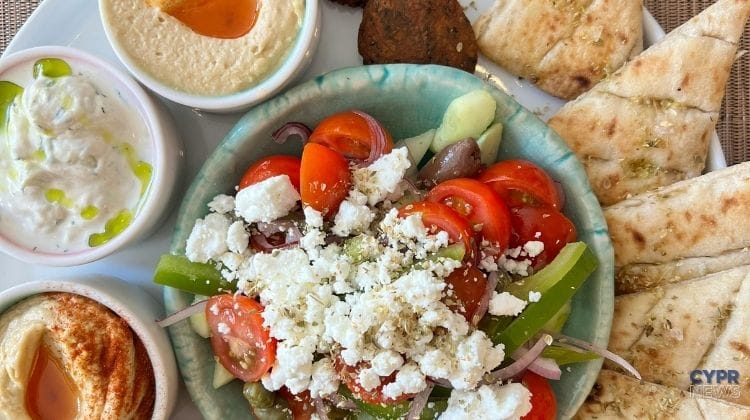
Sunday lunch in Cyprus It doesn't have to mean a quick meal eaten between one point in the day and the next. In the traditional sense, food is merely part of the gathering. Equally important are conversation, family, the successive dishes appearing on the table, and time, which no one particularly tries to measure.
This doesn't mean, of course, that every Cypriot family spends several hours every Sunday at a lavish table. However, the tradition of long, shared meals is deeply rooted in local culture, and official tourist information describes eating with family and friends as an important part of the Cypriot lifestyle.
A good example is ofto kleftiko.
Today, the dish can be ordered in many taverns, but in the past, its preparation took time. The meat was roasted very slowly in a closed oven, ensuring it remained juicy and tender.
According to the official Heartland of Legends project, kleftiko was traditionally prepared on Sundays. Villagers would heat the oven early in the morning, even before leaving for church, to ensure the meat was ready for dinner.
The preparation method itself actually required patience. The modern version of kleftiko also requires several hours of slow cooking.
This wasn't a fifteen-minute dish.
The second classic image is souvla – large pieces of meat roasted on long spits over charcoal.
The official culinary guide, Visit Cyprus, cites souvla as particularly popular during celebrations and large family meals. Lamb, pork, or chicken is roasted on a spit, and the roasting itself becomes part of the celebration.
And this is where the difference between “preparing dinner” and “spending time over dinner” begins to blur.
Someone watches the meat. Someone prepares the side dishes. More people come in, sit down, and chat.
The meal therefore often begins long before the first plate reaches the table.
Meze is perhaps the most famous symbol of long-lasting food in Cyprus, but it is worth explaining one thing:
meze is not just one big dish.
It's a sequence of many small dishes served gradually. Official Visit Cyprus reports that a typical meze includes approximately 15–20 dishes, including bread and other ingredients. In some establishments, the number can reach up to 30.
It usually starts quietly: with olives, bread, salad, and various spreads. Then, other dishes appear—halloumi, lountza, vegetables, meat, or fish, depending on the type of meze ordered and the season. Finally, fruit or traditional sweets may appear.
With this method of serving food, there is really no point in rushing.
It's worth knowing
Meze doesn't have a single, rigid menu. The number and type of dishes vary depending on the tavern, the season, and whether you're ordering a meat, fish, or mixed version.
It is the social nature of meze that Visit Cyprus highlights.
Dishes are placed in the center of the table and shared among the participants. This isn't a model where everyone gets their plate, quickly eats, and leaves.
The courses arrive gradually, with time for conversation in between. Official materials define meze as a social way of eating, not just a collection of local dishes.
Therefore, a tourist's first encounter with real meze may be a bit surprising.
After a few plates you might think that's all.
And then the waiter brings the next one.
And the next.
Heartland of Legends – a project of the Deputy Ministry of Tourism – describing the local "slow life", gives visitors a very simple piece of advice: at a shared table, it is worth trying different dishes, talking and taking your time.
The official description even states that it may take some time to finish such a meal. a few hours.
Not because the kitchen is exceptionally slow.
This is the meaning of the meeting.
Eating al fresco with family and friends was presented as an essential part of the local lifestyle.
Sunday has long been the natural time for a larger family gathering.
That's why dishes requiring advance preparation were a good fit: kleftiko, slowly roasting in the oven, or souvla, rotating over coals. Official materials on traditional cuisine associate both dishes with large family meals, holidays, and Sunday dinners.
Lifestyles have changed, homes and kitchens have changed, and many people now choose to go to a tavern instead of cooking.
However, the idea remained very familiar:
Since everyone is already seated together, there is no reason to get up immediately.
It is also worth not mixing up two things.
Meze can be enjoyed at a taverna practically every day. It's not a dish reserved for Sundays. A family Sunday dinner, on the other hand, doesn't have to consist of a dozen plates of meze.
A home-cooked meal can easily include souvla, kleftiko, baked potatoes, salad, bread, and a few side dishes. The popularity of souvla at large family meals is confirmed by official Visit Cyprus materials.
They have something else in common.
Common table.
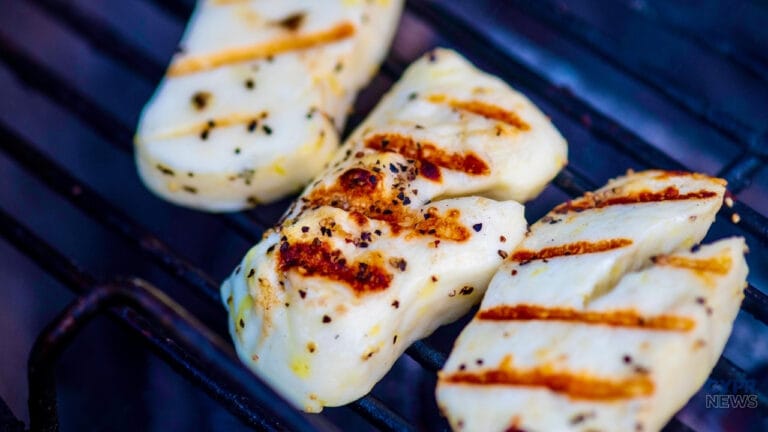
You can describe halloumi.
You can count the meze plates.
You can learn how to prepare souvla and check how many hours kleftiko needs.
But that still doesn't fully explain why a Cypriot dinner can take so long.
The answer lies between the dishes.
Conversation.
Family.
Friends.
Coffee drunk after eating.
And another “stay a while” as someone starts clearing away the plates.
That's why Sunday dinner in Cyprus doesn't always end when the food runs out.
Sometimes that's when the best part begins.
The material was prepared based on information from the Deputy Ministry of Tourism – Visit Cyprus, the Heartland of Legends project and official publications on traditional Cypriot cuisine.,