Supported by


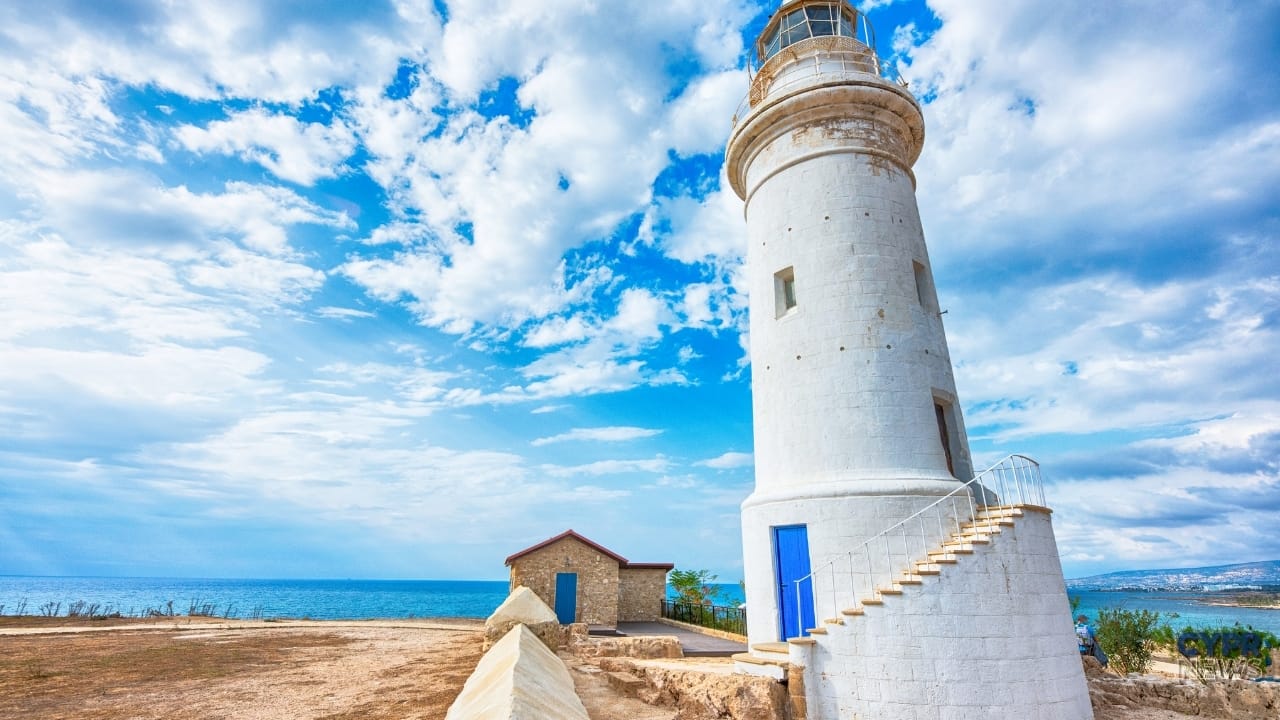
Renovation work on the auxiliary buildings of the Paphos Lighthouse has been completed. The surrounding area has been renovated, access paths have been established, and the area around one of the city's most recognizable landmarks has been tidied up.
During the excavations, archaeologists discovered a cistern, a paved floor, and a canal. These elements likely belonged to an ancient water management system from the early Roman period, dating back to the 1st or 2nd century AD. This indicates that traces of a much older history have been preserved in the immediate vicinity of today's lighthouse.
The building was constructed during the British administration of Cyprus. The lighthouse stands approximately 20 meters high and for decades helped ships navigate safely into Paphos Harbor.
Before organized lighthouses were established, ships were warned of dangerous coastlines by bonfires, which were lit at strategic locations to signal the presence of rocks, shallow water, and other hazards.
The construction of the lighthouse was therefore an important step in the development of professional maritime signalling on the island.
The lighthouse did not operate independently. For many years, it was cared for by lighthouse keepers who lived in adjacent buildings with their families.
Their duties included maintaining lights, monitoring equipment, and ensuring the overall system was operational. The work required constant presence, especially at night, during storms, and in low visibility.
The last family of lighthouse keepers left the buildings in 1982. The reason was technological changes and the increasing automation of lighthouse operations.
From then on, there was no longer a need to maintain a permanent staff on site.
The most interesting element of the completed work are the archaeological discoveries.
A cistern, a paved surface, and a canal were found in the ground. Archaeologists believe these may have formed part of a water system that operated during the Roman period.
This doesn't mean that the lighthouse itself dates back to ancient times. Its construction began only in the 19th century. However, the findings show that the site has been used and transformed throughout the ages.
It is the coexistence of several layers of history that makes the lighthouse area so unique.
Senior archaeologist of the Department of Antiquities, Efstathios Raptou, described the lighthouse as an emblematic object and the most recognizable lighthouse in Cyprus.
The building itself is not an ancient monument. It was built during the British era and later modernized. However, it is located within the Kato Paphos archaeological site, so it forms a unique connection to it.
In one place you can now see the remains of Roman buildings, monuments related to the history of the ancient city and 19th-century maritime infrastructure.
This is a rare situation in which a modern facility still serves its original function and, at the same time, has become part of the heritage and tourist landscape.
Despite the passage of more than 130 years, the lighthouse still serves navigational purposes. Its significance today is different than in the days when lighthouse keepers lived nearby and operated the devices manually, but the light remains a reference point for navigation.
At the same time, the structure has become a permanent fixture in the Paphos skyline. For locals, it is a distinctive feature of the city, and for tourists, one of the most obvious spots on a walking tour of Kato Paphos.
The renovated surroundings and new paths are intended to facilitate access to the site and better connect it with the rest of the archaeological site.
The lighthouse is a good example of how different eras overlap in Cyprus.
First, a Roman water system operated here. Later, British navigation infrastructure was established. For decades, lighthouse keepers lived here, and today the site is visited by tourists strolling through Kato Paphos.
Each of these stories left a material trace.
Thanks to the completed work, the area around the lighthouse is more accessible and clear to visitors. At the same time, the character of the site has been preserved, continuing to serve as a navigational aid.
The Paphos lighthouse is therefore not just a picturesque building by the sea.
It is the meeting point of Roman water management, British maritime history and the contemporary life of one of Cyprus' most important cities.
More information about places worth visiting on the island is published in the section: https://cyprnews.pl/turystyka
Sources: Department of Antiquities of the Republic of Cyprus, Cyprus News Agency, Cyprus Ports Authority.