Supported by


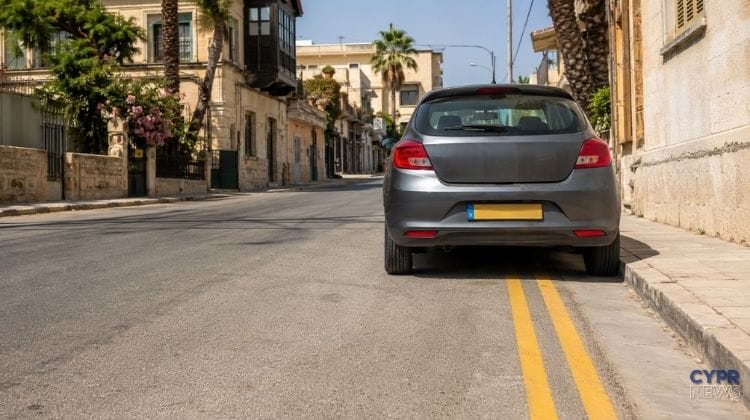
Parking in Cyprus It may seem quite casual at first, especially outside the centers of major cities. However, this doesn't mean you can leave your car anywhere. Whether or not parking is permitted is primarily determined by road signs, parking space markings, and yellow lines painted along the edge of the road.
It's worth checking the rules, especially before leaving your car in the city center, by the beach, at a bus stop, or on a street with heavy traffic. Illegal parking can result in a fine and, in some cases, penalty points.
In cities, there are municipal parking lots, private parking lots, and designated on-street parking spaces. In the centers of Nicosia, Limassol, and other larger towns, some spaces are paid and serviced by parking meters, Pay & Display devices, or SMS systems.
For example, Nicosia has municipal parking lots and hundreds of on-street spaces controlled by parking meters and pay-and-display devices. The city also has zones where parking is limited to 30 minutes or one hour. Limassol operates both long-term and short-term on-street parking spaces.
However, it should not be assumed that all cities have identical fees, operating hours, and payment methods. Information provided on a parking meter or sign at a specific lot takes precedence over rules elsewhere.
Yellow lines are one of the most important markings that a driver should pay attention to.
Stopping and parking are prohibited at double yellow lines. Cars should not be left there, even for a short stop.
The official Cypriot tourism website indicates that both parking and waiting are prohibited on double yellow lines. The official Road Safety Cyprus table stipulates a €100 fine for parking in such a spot.
A single yellow line also indicates no parking. Only short stops for loading or unloading the vehicle may be permitted.
Don't treat a single yellow line as a place to leave your car for a few minutes while shopping or visiting a nearby establishment. Official tourist information states that parking is prohibited there regardless of the time of day.
The safest solution is to use:
Always check for additional signage. A designated space may be reserved for residents, delivery vehicles, taxis, people with disabilities, or drivers using a specific facility.
The absence of a yellow line does not automatically mean that parking is permitted. Parking may still be prohibited by a road sign or due to the location of the space.
The official Road Safety Cyprus table highlights some of the most common offences related to vehicle abandonment.
| Offense | Mandate |
|---|---|
| Parking on the sidewalk | 100 euro |
| Parking too close to an intersection | 100 euro |
| Parking too close to traffic lights | 100 euro |
| Parking too close to a pedestrian crossing | 150 euro |
| Parking too close to a bus stop | 150 euro |
| Parking in a disabled parking space | 300 euro |
| Parking on a double yellow line | 100 euro |
| Parking on the opposite side of the road to the direction of vehicle movement | 100 euros and 1-2 penalty points |
No. Leaving a car on the sidewalk is an offense, even if the driver leaves a small opening for pedestrians.
This type of parking is common on narrow streets, but its prevalence doesn't mean it complies with the law. The official fine for parking on the sidewalk is €100.
It is particularly dangerous to block the passage of people in wheelchairs, parents with strollers and blind people.
Cars should not be parked too close to a pedestrian crossing or bus stop. Vehicles can restrict the visibility of pedestrians and drivers, or prevent buses from stopping safely at the edge of the road.
A fine of 150 euros is provided for both offences.
In practice, you should pay attention not only to the stop sign itself, but also to the bay, horizontal markings and the space needed for the bus to manoeuvre.
Spaces marked with the disabled symbol are reserved for authorized users only. The parking permit should be displayed behind the windshield so that its front side is visible during inspection.
The official tariff for unauthorized use of such a space provides for a fine of €300. This is one of the highest penalties for illegal parking.
You should not stop at such a place even "just for a moment", for example when picking up a passenger or shopping.
Yes. In Cyprus, your car should be parked in the direction of traffic on that side of the road.
Because the island drives on the left, drivers accustomed to Polish roads may unknowingly leave their vehicles facing the wrong way. The official fine for parking on the opposite side of the road is €100 and one to two penalty points.
The simplest rule is this: when parked correctly, your car should be facing the same direction as the vehicles in that lane.
Payment methods vary depending on the city and the specific parking lot. Available options include:
With the Pay & Display system, after paying for your parking, you receive a ticket that must be displayed on your windshield. You should also check the maximum parking time allowed.
Nicosia uses Pay & Display devices, parking meters, and SMS payments in select parking lots, among other systems. Prices vary depending on the parking category and length of stay.
Don't rely on general information that parking is free on weekends. Policies may vary depending on the specific parking lot, operator, and signage.
At popular beaches and tourist attractions, it's best to use designated bays or parking lots. In the summer, a clear shoulder may seem like a natural parking space, but a car parked there can block traffic, emergency services, or private property.
Avoid parking:
In tourist destinations, the rules may be enforced by the police or municipal services.
Fines can be issued by the police and authorized municipal officials, among others. Limassol has its own traffic enforcement department, whose task is to monitor illegal parking in accordance with traffic and municipal regulations. The fine must include the type of offense, the amount, and payment information.
The method and deadline for payment may depend on whether the fine was issued by the police or the relevant municipality. Therefore, please follow the instructions on the document you receive.
We will describe the entire procedure for payment, increasing the penalty and possibly taking the case to court in a separate guide.
First, you should check carefully:
You shouldn't ignore a ticket. You should also keep your proof of payment, especially if the car was rented.
For example, in Limassol, you can pay city parking fines at the office or online. Payment requires the fine reference number and vehicle registration number.
Renting a car does not absolve the driver of liability for any offense. The specific procedure may depend on the specific rental company's regulations.
The company may receive correspondence regarding the vehicle, forward the driver's details to the appropriate authority, or collect an administrative fee specified in the contract. The mere fact that the rental company collects a fee does not necessarily mean that the fine has been paid.
After receiving a ticket, it is worth:
This topic requires a separate guide, as the course of the case differs depending on whether the offense was detected on the spot or recorded on camera.
Before leaving your car, it's worth taking a few seconds to check your surroundings. Pay attention to signs, roadside lines, parking meters, time restrictions, and parking space designations.
The safest way to remember these five rules is:

No. A single yellow line indicates no parking. Only short stops for loading or unloading the vehicle are permitted.
No. A double yellow line means no stopping or parking.
According to the official Road Safety Cyprus report, the fine is 100 euros.
The official table indicates a fine of 300 euros.
No. This offence is punishable by a fine of €100 and one to two penalty points.
There is no single rule that applies to all parking lots. Please check the parking meter, entrance, or sign for a specific zone.
This material is based on information published by Road Safety Cyprus, the Road Transport Department, Visit Cyprus, and the municipalities of Nicosia and Limassol. Fine rates and local parking regulations are subject to change, so please check the information on your fine or at the specific parking lot before paying.